A Twisted Crown of Thorns ®

Reformed. Christianity. Evangelism. Modern Culture.

Category Archives: Calvinism

You-gotta-think-like-fish-if-you-want-to-catch-the-fish-church.

Pastor Baitswitch had finally managed to get the right ingredients for his church choir.

20120619-214939.jpg
But they seemed to have forgotten whom they would be worshipping. 😉

Ten reasons why we will hence forth do no ‘Altar Calls’. No, the piano isn’t broken.

You can imagine the uproar that could occur if the above notice met congregants to most mega churches. Well not only mega churches do ‘Altar Calls’ but most churches I know do. We all know when that moment is a bout to be breached….when the pastor gives a nod and the pianist and worship leader begin to take their places.

But what’s wrong with the ‘Altar Call’ you ask? Well here are ten reasons but first Thabiti Anyabwile humbly explains:

I’m sometimes asked by people why we don’t do “altar calls” at our services. Like the people who ask the question, the churches in my personal background pretty much all practiced “altar calls” at the conclusion of a sermon or service. I’ve seen them done in very poor fashion, and I’ve seen some pastors be really clear about the gospel, repentance, faith, and the fact that “coming forward” does not save. I date my own conversion to the preaching of Exodus 32, which concluded with an altar call.

So, why don’t we practice “altar calls”? I don’t think the pastor who practices an “invitation” at the end of a sermon is in sin, but he may not be acting wisely either. This list of reasons, compiled by Pastor Ryan Kelly of Desert Springs Church, is a pretty good summation of some of my thinking (HT: Z).

1. The altar call is simply and completely absent from the pages of the N.T.

2. The altar call is historically absent until the 19th century, and its use at that time (via Charles Finney) was directly based upon bad theology and a man-centered, manipulative methodology. …Read More!

10 signs you are no longer Young, Restless and Reformed.

On a lighter note…don’t read this while sipping coffee infront of your computer:

Sign #1: You’ve given up smoking your pipe because you want to actually be able to afford term life insurance.

Sign #2: Your ‘Jonathan Edwards is My Homeboy’ shirt is faded and now simply reads, ‘Jonathan Edwards is My Home.”

Sign #3: You now read your ESV Bible more than you read John Piper.

Sign #4: You’ve considered writing a book (for P&R rather than Crossway), Old, Well-Rested, and Reformed. [Copyright: Adam Parker, 2010] (You want the name, Collin Hansen!? Come back in 30 years and just try to get it!)

Sign #5: You find yourself warning newbies about ‘the cage stage,’ and then you find yourself reminiscing about terrorizing unsuspecting Arminians back in your day.

Sign #6: You actually know who Van Til is.

Sign #7: You have decided that is is okay to plod.

Sign #8: Your iPod now has more sermons by Sinclair Ferguson than it does of Mark Driscoll. …Read More!

Basel and the Reformation.

The next highlight of the Reformation week conference was the visit to Basel. ( see Haus Barnabas report here; Constance report here and Zurich report here). The town of Basel was called Basilea or Basilia in Latin and this name is documented from 374 AD. Basel like most Swiss cities is calm and sedate. Beautifully located where the Swiss, French and German borders meet, Basel is Switzerland’s second-largest urban area. the River Rhine runs through Basel and provides such a romantic backdrop to maul up this city’s turbulent and engaging history.

My trip to Basel to trace places of historical importance to the Reformation period started by a cordial visit to a local Swiss Reformed church in Riehen (a municipal of Basel).

This slideshow requires JavaScript.

The Reformed branch of Protestantism in Switzerland was started in Zürich by Huldrych Zwingli and spread within a few years to Basel (Johannes Oecolampadius), Bern (Berchtold Haller and Niklaus Manuel), St. Gall (Joachim Vadian), to cities in southern Germany and via Alsace (Martin Bucer) to France.

In the Swiss Reformed church in Riehen one can still see the long standing traditional architectural structure of the church set up. The pews and wall designs tell of the tensions as you look at the different designs of art of a time gone past. …Read More!

Do you “believe to be born again” or are you “born again to believe”?

No it’s not a riddle. It is not even a trick question. I while back some of my friends kept asking, “Why has Michael become a “Reformed Christian” after several years in prosperity driven and seeker sensitive churches?” So to make things alot easier to understand I thought it’s best to go back to the Bible and back to basics. What  exactly does it mean to become a Christian?

I have come to believe that Salvation begins with an unfailing work of God in the hearts of all those who will believe. While most churches in our current day believe that you “believe to be born again”, like the Reformers and Puritans I have come to believe the opposite about that; my belief is that you are “born again to believe” (see the change in order?).

Here’s a simple quiz for bible believing Christians. …Read More!

Church History: Ulrich Zwingli at a Glance

[Adapted from an article by Steven Lawson]: Other than Martin Luther, Heinrich Bullinger, and John Calvin, the most important early Reformer was Ulrich Zwingli. A first-generation Reformer, he is regarded as the founder of Swiss Protestantism. Furthermore, history remembers him as the first Reformed theologian. Though Calvin would later surpass Zwingli as a theologian, he would stand squarely on Zwingli’s broad shoulders.

Less than two months after Luther came into the world, Zwingli was born on January 1, 1484, in Wildhaus, a small village in the eastern part of modern-day Switzerland, forty miles from Zurich. His father, Ulrich Sr., had risen from peasant stock to become an upper-middle-class man of means, a successful farmer and shepherd, as well as the chief magistrate for the district. This prosperity allowed him to provide his son with an excellent education. He presided over a home where typical Swiss values were inculcated in young Ulrich: sturdy independence, strong patriotism, zeal for religion, and real interest in scholarship. …Read More!

God’s Sovereignty in predestination by Augustus Toplady

When I consider the absolute independency of God, and the necessary total dependence of all created things on Him, their first cause, I cannot help standing astonished at the pride of impotent, degenerate man, who is so prone to consider himself as a being possessed of sovereign freedom, and invested with a power of self-salvation, able, he imagines, to counteract the designs even of infinite wisdom, and to defeat the agency of Omnipotence itself…

And yet, because it so exactly coincides with the natural haughtiness of the human heart, men not only admit, but even relish the deception, and fondly incline to believe that the father of lies does, in this instance at least, speak truth. The Scripture doctrine of predetermination lays the axe to the very root of this potent delusion. It assures us that all things are of God; that all our times and all events are in His hand. ~ Augustus Toplady

HT Test all Things.

Test your child’s theology with five questions….

Test your child’s theology with five questions and then teach him some more. Here are the first five questions:

1. Who made you?

A. God.

2. What else did God make?

A. God made all things.

3. Why did God make you and all things?

A. For his own glory.

4. How can you glorify God?

A. By loving him and doing what he commands.

5. Why ought you to glorify God?

A. Because he made me and takes care of me.

Excerpt from Catechism for Young Children. (An Introduction to the Shorter Catechism) For free down load click here.

HT Reformed Gene via FB.

Dear Hooded pastor, ‘Hoodie Sunday’ will not Heal the rift.

I know social injustice and racial issues really cause a lot of polarizing tension in communities. But the bible says that the solution to the depravity, wickedness and injustice in this fallen world is the gospel. If the right balance is not made with most of these social issues and agendas one can get preoccupied running down rabbit holes chasing shadows. What do I mean?

Atlanta, GA– Pastors, ushers and members of the congregation at Ebenezer Baptist Church wore hoodies instead of their Sunday best to protest the killing of Trayvon Martin.

“We’re standing as the church of nonviolence to say that a hoodie is not a weapon,” said Senior Pastor Rev. Raphael Warnock. “We stand in solidarity with the family of Trayvon Martin. We stand in support of our children who deserve better than to be stigmatized and stereotyped.”

Pastor Warnock stood in the pulpit on Sunday wearing a maroon Morehouse College hoodie.

Ebenezer is one of countless churches across metro Atlanta and the nation recognizing this as “Hoodie Sunday.”

‘Hoodie Sunday’ is just another band aid social fad. Social justice is good but it has it’s place and shouldn’t replace the exposition of the word of God nor the preaching of the gospel on Sunday. Why should congregational worship of God be put on hold on Sunday because of a social agenda? …Read More!

Sermon writing rules then and now…Crikey!

Seeking to train and encourage men to preach, Dr. Somerville wrote “Rules for Sermon Writing” below (left column).  Nollie Malabuyo ‘s article draws that comparison between Somervilles’s guidelines with the prosperity and megachurch preaching we see and hear today (right column). But who was Somerville? In Glimpses of Old Glasgow (1894), Andrew Aird described Rev. Somerville as…

As a preacher Dr. Somerville was fervent; his style of address was that of a scholar; and his prayers were the outpourings of his heart. As a pastor he was held in high estimation by his people; and he frequently occupied Glasgow and country pulpits, where his discourses, full of the knowledge which maketh rich, were ever listened to by large audiences. There was something in the tone of his voice, and in the light of his eyes and the glow of his countenance which made one involuntarily say, “This man has been with Jesus.”
Read more of this post

On Being Cal-minian (Both Calvinist and Arminian)

Ever met some one who said he is both Calvinist and Arminian; straddles both sides of the proverbial fence?  I am proudly Cal-minian they say. Well I know it gives a theological head ache . Listen to this …..

There is so much wrong with that statement that I don’t even know where to begin. First of all it assumes that two mutually exclusive claims can both be true. This is patently false. Believe in both/and propositions all you want, you and the semi truck cannot both cross the intersection at the same time without grave consequences. There is only truth and error. There is only life or death. …Read More!

Aha! So, are you a Calvinist….no ifs and no buts?

So imagine the theological police round you up in a dark street corner and as they breathe down your neck and one asks you,“so, little helpless brat are you a Calvinist?” With the microphone firmly planted to your upper lip say, “You decide. Here is what I believe . . .”

I believe I am so spiritually corrupt and prideful and rebellious that I would never have come to faith in Jesus without God’s merciful, sovereign victory over the last vestiges of my rebellion. (1 Corinthians 2:14; Ephesians 2:1–4; Romans 8:7).

I believe that God chose me to be his child before the foundation of the world, on the basis of nothing in me, foreknown or otherwise. (Ephesians 1:4–6; Acts 13:48; Romans 8:29–30; 11:5–7)

I believe Christ died as a substitute for sinners to provide a bona fide offer of salvation to all people, and that he had an invincible design in his death to obtain his chosen bride, namely, the assembly of all believers, whose names were eternally written in the book of life of the Lamb that was slain. (John 3:16; John 10:15; Ephesians 5:25; Revelation 13:8)

When I was dead in my trespasses, and blind to the beauty of Christ, God made me alive, opened the eyes of my heart, granted me to believe, and united me to Jesus, with all the benefits of forgiveness and justification and eternal life. …Read More!

Putting the ‘G’ back into Genealogies

In this clip Voddie Baucham goes through the genealogies and traces the crimson line from Adam to Jesus. Shweet!

What did the Calvinist buy…

Qn: What did the Calvinist buy his dog?
Ans: A dog collar with “Sola Grrr-atia” written on it. 🙂

HT Nate via Facebook.

Calvinism Makes People Lose Their “Holy Ghost Fire”

"holy ghost party"

When I was a Word of Faith enthusiast I loved God because I was born again and the only church I knew taught what I eventually picked up. I did not understand much of what was taught in church and knew some of the doctrines made no theological or scriptural sense. I easily embraced prosperity theology and any fad that slithered to the pulpit. It is true that when people are always shifting their doctrinal principles, they are not likely to bring forth much fruit to the glory of God. It is good for young believers to begin with a firm hold upon those great fundamental doctrines which the Lord has taught in His Word. But scriptural exegesis and theological exertions are not encouraged by many churches-most especially in the liberal non-cessationist camps. They call this being “pharisaical” or “too conservative” or limiting the move of Holy Spirit who would otherwise want every one to be open minded and receptive to every and anything.

Its against that background that I understand why this young man drew a line in the sand and dared the bravest of Calvinists to smell the coffee on the liberal side:

Recently I made a very hard important decision concerning Facebook. I felt like a few people on my friends list were posting and promoting things, that I feel are a threat to my personal faith walk, and a threat to the effectiveness of the Body of Christ period. If you do not know by now, I am not a Calvinist, and I do not agree with the doctrines of Calvinism and reformed theology (mainly the TULIP). There’s More

Whom did Christ die for? Four basic Universalist theories debunked.

It is often said that the nature of the atonement defines its extent. The atonement is simply coextensive, as far as its saving effects are concerned, with the number of true believers. This should have been the last word, and indeed would have been, were it not for men who, being driven less by religious convictions than by speculative tendencies, deemed it necessary to extend the atonement to all men alike. Today we shall look at the four basic universalist theories:

A. The thorough-going theory of universal salvation; that is, the belief that in virtue of Christ’s work, all men will ultimately be saved. The only good thing that can be said about this theory is that it carries its presuppositions through to their logical consequences. It affirms that the actual restoration attained by Christ is coextensive with the actual ruin of the race. It overlooks justice simply falls back on a fuzzy idea of Divine benevolence. Though it is completely and utterly unscriptural, it is at least self-consistent.

B. Arminianism is the second universalist theory. …Read More!

Help, I need more Arminian friends!

It’s usually said if you want two see to lads play endless theological ping-pong, start a Calvinism vs Arminianism debate and title it “Does man have free will?” You will literally have to drag one of them apart…kicking and screaming. But I must say these theological debates do achieve their own edification in various unseen ways. They are strenuous and it always seems as though the other guy is just playing dumb like Balaam’s donkey. But when you come to finally hear your proverbial nemesis drop his daisies and grab hold of a bunch of graceful Tulips, doesn’t it just warm your heart? (sorry couldn’t resist the pun ;)) This is an excerpt from an article written by Mark Ketchum– on discovering God’s Sovereignty in election, salvation and transformation of a sinner dead in sin:

    …We are not able to seek Him or turn to Him unless He first intervenes to soften our hearts. Are we capable? …. Are we able? No, our hearts are seeped in sin and our depravity makes God undesirable…

    Romans 2:8-9: For by grace you have been saved through faith. And this is not your own doing; it is the gift of God, not a result of works, so that no one may boast.

    I have struggled with this concept for a long time. Ever since the concept of election was brought to my attention, I have fought against the idea of the inability to seek God on my own. During the sermon today at Faith Bible Church, it was as if a light bulb went on for the first time… God does choose us… we do not and cannot choose Him.

    My salvation is not because of anything I have done, but because of what God has done to and through me.

    While John is capable of going to college and graduating with a good degree, he is not able to accomplish this because of his laziness.

    Scripture tells us that we cannot come to Jesus unless we are compelled or drawn by the Father (John 6:44).  Jesus also spoke to us via Parable in Luke 14:16-24, explaining that the Father sent His servant Jesus to compel people to the banquet because nobody would come on their own… they were filled with excuses.

    I do believe in free will, however, now I see that free will is and will always be limited by ourselves. My free will allows me to jump off a roof with my arms a flapping, but I will never be able to fly on my own accord without assistance.

    My free will allows me to choose to murder, but thankfully I never will because that is not in my heart. The same goes for salvation. My free will allows me to choose God, but in my/our depraved state of sinfulness, I never will because it isn’t in my heart… unless God first softens my heart and changes me. Then and only then am I able to have the faith that offers repentance and salvation. …Read More!

The five points of Arminianism made (freely) easy.

The Solitariness of God.

A.W Pink’s classic book The Attributes of God is available free of charge here. (Mobile phone downloads here). One of the first chapters is “The Solitariness of God”. Did you know that…

“In the beginning, God” (Gen. 1:1). There was a time, if “time” is could be called, when God, in the unity of His nature (though subsisting equally in three Divine Persons), dwelt all alone. “In the beginning, God.” There was no heaven, where His glory is now particularly manifested. There was no earth to engage His attention. There were no angels to hymn His praises; no universe to be upheld by the word of His power. There was nothing, no one, but God; and that, not for a day, a year, or an age, but “from everlasting.” During a past eternity, God was alone: self-contained, self-sufficient, self-satisfied; in need of nothing. …Read More PINK!

Code Orange sees Red: Did Matt Chandler rain on Steve Furtick’s parade?

When I heard that Matt Chandler was going to preach at the Code Orange Revival planned by Steve Furtick I was abit sceptical. Looking at the line up of mega church peachers and word of faith gurus, he appeared to be the only conservative preacher. On one side you had T.D Jakes, Craig Groeschel, Christine Cane, James MacDonald, Israel Houghton, Jentezen Franklin, Perry Noble, Stovall Weems, Kevin Gerald and Steven Furtick.

So the stage was set for ..umm…Code Orange! However, Matt sure enough showed up. He indeed came with something up his sleeve. He came to with a no holds barred message. By the end of which it seems some one or some people were seeing RED!! Now, every one seems to be wondering why Matt chandler’s sermons have not been rebroadcast on the website. The whodunnit game is going on. Who lost the tape?

After much searching and looking I seem to have found the missing sermon. And WOW!!!! You gotta listen to this!!!

…Read More!

A day in the life of a relentless Reformed preacher…

One Reformed preacher whose sermons have helped me deal with several theological conundrums is a wonderful man called Arturo G. Azurdia III. Art (for those who know him) and have listened to him usually likes using the word “relentless” and therefore he becomes our first in a series of relentless preachers to be featured. 😉

Lets dig deeper into his personal life and see what things he holds loosely and what things he clings to dearly. Here is an interview excerpted from the Exiled Preacher (2008):

QN: Who has taught you most of what it means to preach the Word of God?

AA: It’s difficult for me to reduce it to one man, because several have had strategic influence on me at various stages of my development.

Shortly after I was converted it was the preaching of …Wanna Read More?

Asahel Nettleton: A Forgotten Evangelist?

Dr. Asahel Nettleton (1783–1844) is considered one of America’s greatest forgotten evangelists. He was a contemporary of Charles Finney and while Finney was conditioning converts and churning out spurious conversions with the anxious seat and altar calls, Nettleton believed this pragmatic “decisionism” was very superficial. In fact, Nettleton was the main opponent of Finney and the “new measures”. He did not seek for quick responses to an open invitation to “come forward” as Finney and his followers did.

It’s said Nettleton’s conversions lasted and bore fruit. For example, of the 84 converts in an 1818 revival atRocky Hill,Connecticut— according to their pastor’s report 26 years later — all 84 had remained faithful. Similarly, only three spurious conversions out of 82 professed commitments were noted by another pastor in his report on revival services held inAshford,Connecticut.  What accounted for this success?

William C. Nichols, modern publisher of Nettleton’s sermons, reported that:

Asahel Nettleton

Nettleton was a thorough student of the human heart. He understood the windings and turnings of the depraved heart and knew how to expose its deceits to awaken the sinner to the desperateness of his lost condition. You who do the work of evangelism today: Are you such a student of the human heart? Do you understand how the unconverted heart operates? In his sermon on “Gospel Warfare” Nettleton said, “Preaching mere external morality will never bring one soul to Christ. That preaching which does not aim at the heart will never bring one soul to Christ. That preaching which does not aim at the heart, and take hold of the conscience, never attacks the strong holds of Satan.” Read More…

Reading Ephesians 2 with John Calvin

So what does Ephesians 2:1-5 say and how does it apply to me?

“Seeing then that we are so corrupted in our souls and that there is neither thought nor affection which is not utterly perverted, let us not think it strange that God with his own mouth pronounces us dead, despite the fact that through our own foolish pride we imagine that there is some life in us. And that is the very thing that St. Paul deals with now in saying that the Ephesians were partakers of the above-mentioned grace, though they were dead through their own sins and iniquities. …Read More!

The cost of taking the gospel out of America

Adoniram Judson lived several years before America’s lucrative export became a lukewarm synthetic form of materialism called prosperity gospel. Adoniram was a selfless Calvinistic Baptist missionary from the United States who labored for almost forty years in Burma. At the age of 25, he was the first Protestant missionary sent from North America to preach in Burma. To summarise his missionary endeavors here is a concise post ….

Anarchic despotism, fierce war with Siam, enemy raids, constant rebellion, and no religious freedom (pg 85). What missionary would decide to go such a place? Although Burma(Myanmar) was essentially what we call a “closed country”, Adoniram Judson went in spite of an admonition from William Carey not to go (pg 85)…at age 24, and with a 23 year old wife! Ahead of Judson was immense loss, which many of us could scarcely imagine. But through it all he could say “If I had not felt certain that every additional trial was ordered by infinite love and mercy, I could not have survived my accumulated sufferings” …Read More!

The most terrifying truth of Scripture…

Paul Washer explains the most terrifying truth of Scripture:

…Read More!

Nutsafarians – Nuts for Arminians to Crack!

This will make you chuckle. The following are some of the questions found in a book “Nuts For Arminians To Crack” by  Elder J. B. Hardy.
FREE AGENCY
1.  Are all men both saint and sinner free agents? If so, is not the sinner as free as the saint?
2.  If a sinner cannot come to Christ of his own free will, is he a free agent?
3.  If all sinners possess will and power to come to Christ, why did Christ say (John 6:44), “No man can come unto Me except the Father which hath sent Me draw him?”
4.  Has any man the power to refuse to come to Christ when the Father draws him?
5.  Are those characters free agents that shall do wickedly and none of them shall understand? (Dan. 12:10) …Read More!

Total Depravity:What is the difference between me and Hitler?

This short clip expounds on the doctrine of total depravity:

The Marked up, Highlighted and Circled Bible.

Some people believe there should be a state of ceremonial purity when touching a holy book. A man or woman must take a ritual shower or bath to attain a heightened level of righteousness before he even glimpses into the written mind of God as it were. Christians on the other hand come in two categories. Those who love their bibles and those who really love their bibles. Today I will dwell on the eccentric latter.

“A bible that’s falling apart usually belongs to someone who isn’t.” -Charles Spurgeon

They are called Bible markers! Are you one of them? …Read More!

Ezekiel Azonwu: Almost (SAVED) Poem

“Almost” poem by Ezekiel Azonwu is a must listen for every body(transcription included below):

One of the most dangerous terms in English diction
if it could be translated into audio it would sound like
pbb-bb-bb-bb from the saxophone of Lisa Simpson
two words designed and strategically combined
to form the biggest oxymoron in the history of mankind
ALL-MOST …Read More!

If only I could defeat Calvinism.

Here is a humorous video (with awesome royal marching music in the background) illustrating a number classic errors that are frequently used by opponents of Calvinism.

HT Turretin Fan

What was Martin Luther’s Conversion like?

What was Martin Luther’s conversion like? Thanks for asking. Well you see…
With help from the old monk and Staupitz, but especially from the study of Paul’s Epistles, Luther gradually was brought to the conviction that the sinner is justified by faith alone, without works of law. By the end of his convent life he came to the conclusion that “the righteousness of God” (Rom. 1:17) is the righteousness which God freely gives in Christ to those who believe in him. Righteousness is not to be attained through man’s own exertions and merits. Rather, it is complete and perfect in Christ, and all the sinner has to do is to accept it from Him as a free gift. …Read More!

What do you tell a native from a land that has never heard about Jesus?

This is a missionary video clip. The people have just heard that they are sinners. They have also just heard that God sent Jesus Christ to bear the sins (be the sin bearer) of those who would believe. [Watch this short clip and see what happens next]

Or do we no longer use the word sin any more in our messages on Sunday? The gospel is good news to the agonising, wretched sinner who understands the completed work of Christ on the cross on his behalf as his sin bearer. …Read More!

The Charles Spurgeon Movie

I wonder if you have watched this before? Charles Haddon Spurgeon is said to have been one of the most prolific preachers that England has ever produced. His sermons relentlessly pointed to Christ and he emphasised the Sovereignty of God in salvation. Have a peek…

[HT Jim West via Facebook]

The Movie: Martin Luther

Dementia: Will I still remember the gospel in that dark hour?

I recently had the opportunity of visiting a friend whose devout Christian mother now has dementia. Instead of leaving at the end of the visit with a spirit of heaviness, I left pretty much encouraged in the Lord. I will tell you why.

For those who do not know what dementia is, imagine having started reading this article and then as though as from sleep you catch yourself asking: Hey who am I? What am I doing on this blog? This is usually what happens in the early stages of dementia. …Read More!

Theological Imperialism and The Black Community

Interesting conversation here:

[HT Thabiti Anyabwile]

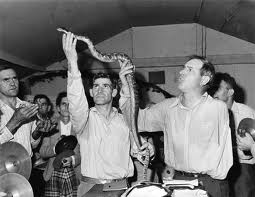
Read this before attending a snake handling church service.

One very good piece of advice would be to avoid a snake handing church service. But most people love impromptu adventure and will scale Mount Everest just to place chewing gum on the top of the mountain –  because the bible verse for the day (which just happened to be John 13:27) said  ‘what you are about to do, do it fast’. So…

How do you know if you have inadvertently wandered into a snake handling church? For one thing, every single congregation has several members who are badly maimed or disfigured. In the 40 US churches there have been over 100 fatalities. But if that doesn’t tip you off: If the greeter at the door looks genuinely surprised that you’ve come to visit; or if they ask for the offering in cash, check, or mouse. …Read More!

Chart Showing How Different Christian Denominations See Each Other.

On a lighter note: I came across this witty chart and I still haven’t stopped rolling on the floor laughing. (ROFL for you tweeters who use 140 characters or less). See what you make of it:[HT Zwinglius Redivivus]

Is Sanctification Synergistic or Monergistic?

It is always good to get involved in meaty theological discussion that challenges you to read more of the bible and flex your spiritual muscles. Imagine the excitement when one pastor went to meet up with his study class and found this question being discussed. Well I will let him tell the story….

Recently, in a leadership training class at our church, a spirited discussion broke out on whether sanctification is monergistic or synergisitic. No, this is not what every class is like at University Reformed Church. But this one was. I wasn’t there, but I was told the discussion was energetic, intelligent, and respectful. I’m glad to serve at a church where people know and care about this level of theological precision. …Read More!

Who was Loraine Boettner?

Today I was reading Loraine Boettner’s classic book The Reformed Doctrine of Predestination (1932). Well, it wasn’t the first time I was tucking into it. It has always (okay over the last 2 years) been one of my favorite books. At this point I look at my small library and immediately shudder (yeah, its a very small library these days after I got rid of my word of faith, prosperity and purpose driven rubble).

So, who was Loraine Boettner? Where do we begin? Well…

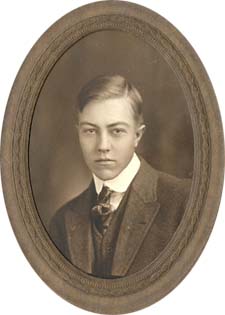
Loraine Boettner

Loraine was born March 7th 1901 in Linden Missouri. He lived with his family; his father being a Christian school superintendent and his mother a housewife. Loraine attended his father’s church until he was 18. Then he joined his mother’s church–the Centennial Methodist Church; his mother was of a different denominational background than his father. …Read More!

Total Depravity: Debunking Common Straw Man Arguments

The usual way of arguing against one of the doctrines of grace is first, to misrepresent it so badly that no serious student of the Scripture would ever embrace it; then totally demolish it with arguments that have nothing at all to do with the issue. You have heard these straw man arguments before. Now we shall boldly look at them and debunk them one straw at a time. Some say the doctrine of total depravity (inability) cannot be true because:

1. The Bible teaches that all are responsible to believe and repent.

2.The Bible teaches that man has a will (choice). Man is not a robot or a puppet.

3. Every man does not act as sinfully as he is capable of acting.

4. Even wicked men perform acts which are good in the sight of other people.

Well…

1. The Bible teaches that men, controlled by a sinful nature, are not able to believe or repent. The person who believes in free grace has no argument with the truth that sinners are responsible. …Read More!

Pre destination or Unconditional Election: Debunking Common Straw Man Arguments

What are the common straw man arguments against Predestination also called the doctrine of God’s fore knowledge or Unconditional Election? It is argued that the doctrine of “Unconditional Election” cannot be true because:

1. Anyone who wants to be saved, can be. “Whosoever will May come.”

2. God does not delight in the destruction of the wicked (Ezekiel 33:11), but desires that all men repent.

3. We should preach the gospel to everyone. If God has only planned to save some, why should we preach to and pray for all?

4.”Election” and “predestination” are terms contrived by the Calvinists to cause confusion, bring division, and excuse a lack of evangelistic zeal (The issue is whether election ever took place or not).

Well lets tackle each of these issues one straw at a time:

1. The true believer in free grace will never deny that God has extended a free offer of mercy, in Christ, to all who hear the Gospel. To deny that “Whosoever will may come,” is to deny the clear teaching of God’s Word. The real issue, however, is whether any will desire salvation (in God’s way and on God’s terms) unless God gives him that desire (Psalm 14:1-3; Romans 3:11; Psalm 58:3-5; John 3:14-21, 5:40). …Read More!

The Chopping Block: Hip Hop Artists Grappling with Reformed Theology.

Lamp Mode Recordings  is an independently owned and operated recording label based out of Philadelphia, PA. In its recent talk show (The Chopping block) Json, Stephen the Levite, Hazakim and Shai Linne step up to discuss “Reformed Theology” Listen in…

Lamp Mode Recordings appears to be more theologically driven than entertainment bent. Their mission statement reads:

Highlighting the Character of God, while presenting the gospel of Jesus Christ and a biblical world view through hiphop culture…We are not influenced by the radio. We are not influenced by “what’s hot”. …Read More!

Help! I Think My Wife’s A Calvinist!

On a lighter note: Don’t adjust your screen – its just an oldie but a goodie!

For some reason my wife likes humming to this song. 😉

Why many of us are Calvinists.

What Does John 3:16 Actually Say?

This may be the best 10 minutes you will perhaps spend on one verse this week:

They Did Not Expect To Die That Day

This interesting street preaching clip has a harrowing truth in it (and also the gospel)! It probably carries alot more theology than may be heard in some churches these days. Listen in….

How (Not) to Win a Theological Debate When You Run Out of Bible Verses!

A Young Man (No, Not Steve Furtick) Takes on Paul Washer: But I Don’t Understand Election.

Its good to see young men asking profound theological questions and not just follow the entertainment band wagon that most churches and sunday schools adopt to kill time on sundays. A great clip of a young man asking interesting questions:

Many argue that a deep theological understanding gravitates Christians away from Christ. Don’t study too much, as it were. But this argument presupposes that more studying will find things that the person doesn’t like, effectively smashing the ideas they’ve created in their mind about how God should be. In effect, the opposite is true. For those who are called, more study and understanding leads us to more worship of the true God and more facets of Him to adore. ~Andrew Taylor (via Facebook)

An Open letter To An Arminian Who Chooses To Pour The Soup into The Fire.

Frank Turk never minces his words; nor his food. Once he cooks food, he salts it very well and he loves his soup the way it should be -well salted too. But one thing that Frank never tolerates seems to be hypocricy. Inconsistency rubs him the wrong way. This time it’s renowned Arminian Theologian Roger Olson’s dabbling butter fingers that have poured the last proverbial soup into the fire. (Yes, all of it!). So, the food is all wasted and the party is now officially O-V-E-R!

And you know what that means? Yes, an open letter (from Frank himself)…

Dear Dr. Olson;

I thought I was going to be a fan of yours back when you published the level-headed IVP classic Arminian Theology: Myths and Realities in 2006. It helped me get over my own vestiges of cage-stage Calvinism, and it’s a fine discussion of the Arminian theology. I like someone who puts a little of his own fat in the fire when it comes to explanation and argumentation, so I appreciated that really, what you wanted was to engage some of the daffier calvinist apologetics and counter-apologetics with some salt and vinegar, and I say good on you.

That, of course, doesn’t finally persuade me that you have the better systematics or even approach to theology, church and evangelism, but I credit you for being a sound in-house adversary for what you believe. …Read More!

Lessons in Theology From A Young Boy Barely Seven Years Old

The Heidelberg Catechism is a Protestant confessional document taking the form of a series of questions and answers, for use in teaching Reformed Christian doctrine. It has been translated into many languages and is regarded as one of the most influential of the Reformed catechisms. This young boy in this clip goes through the first 16 questions and answers (with his dad, an ex sunni muslim). Watch this…

Now who says kids dont like theology?

Rated R for Reformed

Its hard to know all your 5 million or even 50 followers and friends on Facebook or Twitter or circled ones (on Google+) intricately. Once in a while I just love to read snippets that people write about themselves and their favorite quotations. Some are satirical, others philosophical and others profoundly theological. I really liked this one …

RATED R FOR REFORMED

IT IS GOD WHO:
– draws people to Himself (John 6:44,65). 
– creates a clean heart (Psalm 51:10). 
– appoints people to believe (Acts 13:48). 
– works faith in the believer (John 6:28-29). 
– chooses who is to be holy and blameless (Eph. 1:4). 
– chooses us for salvation (2 Thess. 2:13-14). 
– grants the act of believing (Phil. 1:29). 
– grants repentance (2 Tim. 2:24-26).  Read More!

Can I Be A One-Point Calvinist?

You have heard of people calling them selves three-point or four point Calvinists and others parading banners of the New-Calvinist fame. But in what context do all these variances arise? J.I. Packer makes a very interesting point:

The very act of setting out Calvinistic soteriology [the doctrine of salvation] in the form of five distinct points (a number due, as we saw, merely to the fact that there were five Arminian points for the Synod of Dort to answer) tends to obscure the organic character of Calvinistic thought on this subject. For the five points, though separately stated, are inseparable. They hang together; you cannot reject one without rejecting them all, at least in the sense in which the Synod meant them. For to Calvinism there is really only one point to be made in the field of soteriology: the point that God saves sinners. Read More

Doctrine Divides: Lets Just Love one Another?

There are many who say why emphasize sound doctrine? Why dont we just lay our differences aside, get along together and just love one another? Well, sound doctrine will divide and rightly so. It will seperate unsound teaching from sound biblical teaching. If you love somebody who is imbibing unsound doctrine you will alert him, rebuke him and earnestly point him to what is right. Depraved indifference urges us to keep quiet as our fellow man un wittingly drifts to their ship wreck and destruction.  What would you do if you saw fellow Christians babbling in strange fires and delving in questionable practices? Would you love them enough to point them back to the bible or “love them” by  leaving them to drift on? Charles Spurgeon said:

A religion which is all excitement, and has little instruction in it, may serve for transient use; but for permanent life-purposes there must be a knowledge of those great doctrines which are fundamental to the gospel system. I tremble when I hear of a man’s giving up, one by one, the vital principles of the gospel and boasting of his liberality. …Read More!

A Quiz For My Arminian Friends

I hope this Theology quiz goes the distance to help you understand your Bible and appreciate that God is the author of salvation. He alone can sustain a Christian and will complete the work He started on the day He glorifies him.

But Hey You Used to Speak in Tongues, So What Happened?

For many Reformed Christian friends who at one time were non-cessationists [and spoke in tongues as vibrant and enthusiastic charismatics] and  later became cessationist, this is a very common question that always gets thrown your way. But like any answer to any question about any Christian practices we must always base our answers on what the bible says. So, do I still speak in tongues? Samuel Say answers….

No I do not and cannot speak in tongues. I use to practise what I thought was tongues, but by the grace of God I learned through prayer and biblical study that I was deceived. Here is my answer to a question I received about tongues several months ago:

1. Is the gift of tongues a spiritual language?
2. Is the gift of tongues a form of prayer?
3. Can man speak in tongues whenever he wants to? …Read More!

The Uh, Uncompleted Work of Christ…

Thanks to one of my Face book friends (Mark Todhunter) for the quote of the week….

If the Arminians are right, instead of “It is finished” Jesus should have said “So far so good…now it is up to them” – Dan Phillips

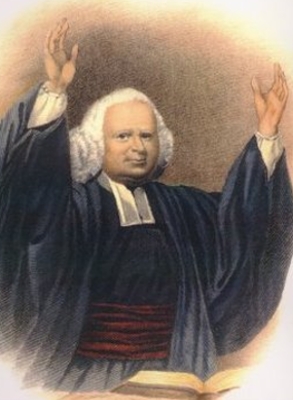
George Whitefield To John Wesley: Error Must Be Opposed

The tension between two great evangelical ministers can never be profound yet graciously loving than the public and personal tensions between George Whitefield and John Wesley. On one front one would easily have had the impression that these two would never even share a drink at a communion table. The most surprising twist was that George Whitefield actually asked Mr Wesley to eulogize at his funeral. But did that bury the proverbial hatchet? Did Whitefield eventually roll over and accept defeat to Wesley? Far from it. Iain Murray in this article rightly summarises this unique conundrum:

George Whitefield

    The occasion and background of [Whitefield’s letter to Wesley] requires a few words of explanation. From the time of his conversion in 1735, Whitefield had been profoundly conscious of man’s entire depravity, his need of the new birth, and the fact that God can save and God alone. Describing an experience which occurred a few weeks after his conversion, he wrote: “About this time God was pleased to enlighten my soul, and bring me into the knowledge of His free grace . . .” Strengthened by his reading of the Scriptures, the Reformers and the Puritans, Whitefield gradually grasped the great related chain of truths revealed in the New Testament—the Father’s electing love, Christ’s substitutionary death on behalf of those whom the Father had given Him, and the Spirit’s infallible work in bringing to salvation those for whom it was appointed. These doctrines of “free grace” were the essential theology of his ministry from the very first and consequently the theology of the movement which began under his preaching in 1737. …There’s More!

A Watch Night Service: Spurgeon in Prayer

Charles Spurgeon is remembered for his fervent preaching. Today I will feature a prayer he made just before he preached on a passage in Lamentations (Lam 2:19) – when Jeremiah the weeping the prophet  had wept his eyes dry for the slain of the daughter of his people; and when he had done all he could himself to pour out tears for poor Jerusalem, he then begged Jerusalem to weep for herself.

Jeremiah by Michaelangelo

O God, save my people! Save my people! A solemn charge hast thou given to thy servant. Ah! Lord, it is all too solemn for such a child. Help him; help him by thine own grace, to discharge it as he ought.

O Lord, let thy servant confess that he feels that his prayers are not as earnest as they should be for his people’s souls; that he does not preach so frequently as he ought, with that fire, that energy, that true love to men’s souls. But O Lord, damn not the hearers for the preacher’s sin. Oh, destroy not the flock for the shepherd’s iniquity. Have mercy on them, good Lord, have mercy on them, O Lord, have mercy on them!

There are some, Father, that will not have mercy on themselves. How have we preached to them, and laboured for them! O God thou knowest that I lie not. How have I striven for them, that they might be saved! But the heart is too hard for man to melt, and the soul made of iron too hard for flesh and blood to render soft. O God, the God of Israel, thou canst save. There is the pastor’s hope; there is the minister’s trust. He cannot but thou canst, Lord; they will not come, but thou canst make them willing in the day of thy power. Read More

God’s Wit: Unwitting and Unwilling Man

A very interesting post by Andy Underhile on God’s sovereignty:

John 11:49-52 tells us, “But one of them, Caiaphas, who was high priest that year, said to them, “You know nothing at all. Nor do you understand that it is better for you that one man should die for the people, not that the whole nation should perish.” He did not say this of his own accord, but being high priest that year he prophesied that Jesus would die for the nation, and not for the nation only, but also to gather into one the children of God who are scattered abroad.”
This is an amazing text. It demonstrates, quite emphatically the sovereignty of God over men’s wills – even over the wicked. Even enemies of God, who hate Him and wish to rebel against His will, are still under His sovereign power and cannot so much as move apart from Him. Moreover, they are often used, unwittingly and unwillingly, as instruments for the very plans of God they wish to frustrate. …Read More!

Well You Might Just Be A Calvinist If…

On a lighter note I hope this keeps you chuckling in bed tonight:

You Might Just Be A Calvinist If….

If your child’s first word was “Westminster”… you just might be a Calvinist.

If your 4 year old can explain what the word “propitiation” means… you might just be a Calvinist.

If you send your mother tulips on Mother’s Day… you might be a Calvinist.

If your passion for evangelism blows away your Arminian friends… you might just be a (true) Calvinist.

If you cringe every time you hear someone proclaim “God loves you and has a wonderful plan for your life! Choose Jesus!”… you might be a Calvinist.

If you’ve ever wanted to attend a Benny Hinn crusade just so you could stand up and shout “Ichabod!!”… you might just be a Calvinist.

If you purposefully read a book to be convicted… you might just be a Calvinist.

If you have to order theological books online because no one at the Christian bookstore has ever heard of them… you might just be a Calvinist. There’s More

You May Be A Carnal Christian If You Believe In…

It is said that many regularly occupy church pews, fill church rolls, and are intellectually acquainted with the facts of the gospel but never strike one blow for Christ. They seem to be at peace with his enemies. They have no quarrel with sin and, apart from a few sentimental expressions about Christ, there is no biblical evidence that they have experienced anything of the power of the gospel in their lives. Superficially called by the oxymoron ‘carnal christians’ but why are they called so when the bible never uses such a term?  To believe in carnal christianity (sic) you have to force your self to  make 9 serious errors in doctrine:

1. The misuse of I Corinthians 3

This ‘carnal Christian’ doctrine depends upon a wrong interpretation and application of 1 Corinthians 3:1-4, ‘And I, brethren, could not speak unto you as unto spiritual, but as unto carnal, even as unto babes in Christ… are ye not carnal?’ To understand the true meaning of these words it should be remembered that 1 Corinthians is not primarily a doctrinal epistle…

In endeavoring to understand how Paul thinks of those he addresses in 1 Corinthians 3 we must bear in mind the designation he gives to them in chapter 1. He says they are ‘sanctified in Christ Jesus’, they are recipients of ‘the grace of God’, enriched by Christ ‘in all utterance, and in all knowledge’ (1:2-5). They are rebuked in chapter 3, not for failing to attain to privileges which some Christians attain to, but for acting, despite their privileges, like babes and like the unregenerate in one area of their lives.

This is very different from saying that the Apostle here recognizes the existence of a distinct group of Christians who can be called ‘carnal’.

The spiritual may be but babes in grace and babes in knowledge. Their faith may be weak. Their love may be in its early bud, their spiritual senses may be but little exercised, their faults may be many; but if ‘the root of the matter’ is in them and if they have passed from death unto life — passed out of the region of nature into that which is beyond nature — Paul puts them in another class. They are all spiritual men although in some aspects of their behavior they may temporarily fail to appear as such.

Certainly these Christians at Corinth were imperfectly sanctified, as indeed are all Christians to a greater or lesser degree. But Paul is not saying that they were characterized by carnality in every area of their lives… Read More!

How To Tell Children About Predestination.

Many people assume children do not understand as much theology as they should. Others prefer to keep children in sunday school where they can play with video games, have pizza parties and become distracted to death with endless games. Dr Wayne Grudem has another idea regarding teaching children theology and in particular fundamental doctrines of the Christian faith:

church clowns

Wayne mentioned that he taught 4th grade Sunday school from 1967-1969 at Park Street Church in Boston. His other form of experience came from parenting (together with his wife Margaret) three sons who are now 33, 30, and 27 years old.

[On the doctrine of predestination or election] Election is an act of God before creation in which he chooses some people to be saved, not on account of any foreseen merit in them, but only because of his sovereign good pleasure.

Children can understand choosing. They have experiences of being chosen for a team, or a play. So we can tell them “God chose you to be a part of his team, his family.” Being chosen could encourage pride, unless we also teach kids that it was not a result of anything that they did (Eph. 1:4-6, I Thes. 1:4-5).

“Well, when did he choose us, Daddy?” A child may ask. Read More…

Taking Comfort in God’s Providence

It is lucrative to preach that God will bless you if you only….[add your favorite verb here]. Most people prefer to have self help/ motivational preachers tell them how successful they can become if they only “sow a seed” or do this or that. But what happens to the person who has scraped the bottom of the proverbial barrel and has nothing? Absolutely nothing to offer and is looking to God to intervene? Yes, do we hear enough of God’s providence these days?

Well, What then is God’s providence?

Elijah being fed by ravens...

“The lot is cast into the lap, but its every decision is from the LORD” (Pro. 16:33).

“God’s works of providence are his most holy, wise, and powerful preserving and governing all his creatures, and all their actions” (Westminster Shorter Catechism Q.11). If Creation was a unique exercise of divine energy causing the world to be, providence is a continued exercise of that same energy whereby the Creator, according to his own will, (a) keeps all creatures in being, (b) involves himself in all events, and (c) directs all things to their appointed end. The model is of purposive personal management with total “hands-on” control: God is completely in charge of his world. His hand may be hidden, but his rule is …Read More

You Mean Spurgeon Did Not Even Make One Altar Call?

C.H. Spurgeon invited men to come to Christ, not to an altar.
Listen to him invite men to Jesus Christ

Before you leave this place breathe an earnest prayer to God, saying, ‘God be merciful to me a sinner. Lord, I need to be saved. Save me. I call upon Thy name….Lord, I am guilty, I deserve Thy wrath. Lord, I cannot save myself. Lord, I would have a new heart and a right spirit, but what can I do? Lord, I can do nothing, come and work in me to do of Thy good pleasure.Thou alone hast power, I know To save a wretch like me; To whom, or whither should I go If I should run from Thee? There’s More…

So If God Created All Things Did He Create Evil Too?

The bible says that God is Omniscient (all knowing) and Sovereign. He created the entire universe ex nihilo (out of nothing) and ordains or allows events and times. Nothing happens without His express permission. Yes, even wars, floods, tsunamis, holocausts and earthquakes. So then, some ask: How do you reconcile God’s Holiness with the evil all around us? Did a Holy God create evil? How could he fore see  Adam’s  fall from grace and let it happen?

THE objection may be raised that if God has foreordained the entire course of events in this world He must be the Author of Sin. To begin with, we readily admit that the existence of sin in a universe which is under the control of a God who is infinite in His wisdom, power, holiness, and justice, is an inscrutable mystery which we in our present state of knowledge cannot fully explain. As yet we only see through a glass darkly. Sin can never be explained on the grounds of logic or reason, for it is essentially illogical and unreasonable. The mere fact that sin exists has often been urged by atheists and skeptics as an argument not merely against Calvinism but against theism in general. There’s More…

God’s Sovereignty in Conversion of Zacchaeus

The story of Zacchaeus in Luke 19:1-10 goes: “Then Jesus entered and passed through Jericho. Now behold, there was a man named Zacchaeus who was a chief tax collector, and he was rich. And he sought to see who Jesus was, but could not because of the crowd, for he was of short stature. So he ran ahead and climbed up into a sycamore tree to see Him, for He was going to pass that way. And when Jesus came to the place, He looked up and saw him, and said to him, ‘Zacchaeus, make haste and come down, for today I must stay at your house.’ So he made haste and came down, and received Him joyfully. But when they [self-righteous unbelievers, probably Pharisees] saw it, they all murmured, saying, ‘He has gone to be a guest with a man who is a sinner.’ Then Zacchaeus stood and said to the Lord, ‘Look, Lord, I give half of my goods to the poor; and if I have taken anything from anyone by false accusation, I restore fourfold.’ And Jesus said to him, ‘Today salvation has come to this house, because he also is a son of Abraham; for the Son of Man has come to seek and to save that which was lost.'” Looking closely:

Zacchaeus is so very typical of the lost. The lost are those who are yet in their sins, lost from the fold of safety and salvation.

1) Zacchaeus was lost even though he had a good name. Zacchaeus means “the righteous one.” It may have been a noble gesture for his parents to bestow such a honorable name to him, but they could not bestow righteousness itself. He was, like every other member of humanity, from the womb a sinner (Psalm 51:5; 58:3), and therefore “a man who is a sinner” (v.7). Read More

A.W Pink on Modern Gospel Message.

It’s said real men love Pink and how rightly so in this instance:

“When addressing the unsaved, preachers often draw an analogy between God’s sending of the Gospel to the sinner, and a sick man in bed, with some healing medicine on a table by his side: all he needs to do is reach forth his hand and take it. But in order for this illustration to be in any wise true to the picture which Scripture gives us of the fallen and depraved sinner, the sick man in bed must be described as one who is blind (Ephesians 4:18) so that he cannot see the medicine, his hand paralyzed (Romans 5:6) so that he is unable to reach forth for it, and his heart not only devoid of all confidence in the medicine but filled with hatred against the physician himself (John 15:18). O what superficial views of man’s desperate plight are now entertained! Christ came here not to help those who were willing to help themselves, but to do for His people what they were incapable of doing for themselves: There’s More

Spurgeon on The Errors of Hyper-Calvinism

If you missed the Primer on Hypercalvinism I would beg you to have a look at a good definition of the term. (Hypercalvinism and Calvinism are poles apart). It is not surprising therefore to see that Charles Spurgeon strived to point out these errors of Hypercalvinism:

1.The hyper-Calvinist denies that gospel invitations are to be delivered to all people without exception. He limits the purpose of gospel preaching to bringing in the elect, and so only the elect are to be addressed with the commands, invitations and offers of the Word. There is to be no pleading with, exhorting and beseeching of an entire congregation of sinners. That attitude was totally rejected by Spurgeon, who on many occasions addressed every single hearer thus: “‘These are written that ye might believe that Jesus is the Christ, the Son of God; and that believing ye might have life through his name.” Look to him, blind eyes; look to him, dead souls; look to him. Say not that you cannot; he in whose power I speak will work a miracle while yet you hear the command, and blind eyes shall see, and dead hearts shall spring into eternal life by his Spirit’s effectual working’ (MTP, 40, 1894, p.502). There’s More

Video: George Whitefield -In The Words of Martyn Lloyd Jones

A brilliant documentary narrated by Dr. Martyn Lloyd Jones: George Whitefield was born on December 16, 1714, in Gloucester, England. The youngest of seven children, he was born in the Bell Inn where his father, Thomas, was a wine merchant and innkeeper. His father died when George was two and his widowed mother Elizabeth struggled to provide for her family. There’s More…

When John Knox Gave Mary Queen of Scots a Bloody nose.

Further in our study of church history we shall look at Scotland. In 1561, Mary Queen of Scots arrived in Scotland from France, and immediately issued an order to celebrate Mass in her private chapel. On hearing that, Mary’s relatives and attendants threatened to return to France, rather than live in a land where Mass could not be said, John Knox stated “Would that they, together with the Mass, had taken goodnight of this realm forever.” He denounced the Mass from the pulpit, concluding his sermon with the words that “one Mass is more fearful to me, than if ten thousand armed enemies were landed in any part of the realm.”

Knox well understood that this would only be the first step in a counter-reformation, designed to overthrow the work which had been achieved so far. His words were reported to Mary, and he was summoned to appear before her in conference. Mary accused Knox, saying,

[Here is the conversation]  Mary: “You have taught the people to receive another religion than that which their princes allow; but God commands subjects to obey their prince. Therefore you have taught the people to disobey both God and their prince.”

“Madam,” Knox calmly replied, “as right religion receive not its origin nor authority from princes but from the eternal God alone, so are not subjects bound to frame their religion according to the tastes of their princes, for oft it is that princes are the most ignorant of God’s true religion. . .”

“Well then,”, she said, “I clearly perceive that my subjects shall obey you, and not me; and shall do what they list and not what I command; and so must I be subject to them and not they to me.”

“God forbid,” answered Knox, “that ever I take upon me to command any to obey me or to set subjects at liberty to do whatever pleases them. . . My travail is that both princes and subjects may obey God. And think not, Madam, that wrong is done you when you are required to be subject unto God, for He it is who subjects peoples under princes, and causes obedience to be given unto them. . .”

“Yea,” replied the queen, “but ye are not the Kirk that I will nourish. I will defend the Kirk of Rome; for it is, I think, the true Kirk of God.”

“Your will, Madam, is no reason; neither doth it make that Roman harlot to be the true and immaculate spouse of Jesus Christ. . .”

“My conscience is not so,” said Mary.

“Conscience, Madam,” said Knox, “requires knowledge, and I fear that right knowledge, ye have none.” There’s More…
So Who Are The Reformed Baptists?

History

After the time of the apostles, churches continued to multiply everywhere. As the years passed, many churches began to depart from the teachings of the Bible. Superstition and human traditions were propagated as truth. Wars were waged in the name of Christianity. Immorality, idolatry and corruption were rampant in the so-called Christian world. The true Christians were a persecuted minority.

In the 16th century, God brought about a mighty stirring inEurope, causing many people to seek Him and hunger after the truth. This is now called the Reformation. Despite the attempts of the older churches to counter this movement, new churches were founded right through to the 17th century.

InEngland, the Particular Baptist churches arose in the first half of the 17th century. They were known as Baptists because, unlike the other reformed churches, they held to the baptism of believers by immersion. They were known as Particular Baptists because, unlike the General Baptists, they held to the doctrine of ‘particular redemption’, i.e. the belief that Christ died specifically for the elect. There’s More

Who Was John Owen?

Today we continue our study of church history. John Owen is the man we shall look at:

John Owen, called the “prince of the English divines,” “the leading figure among the Congregationalist divines,” “a genius with learning second only to Calvin’s,” and “indisputably the leading proponent of high Calvinism in England in the late seventeenth century,” was born in Stadham (Stadhampton), near Oxford. He was the second son of Henry Owen, the local Puritan vicar. Owen showed godly and scholarly tendencies at an early age. He entered Queen’s College,Oxford, at the age of twelve and studied the classics, mathematics, philosophy, theology, Hebrew, and rabbinical writings. He earned a Bachelor of Arts degree in 1632 and a Master of Arts degree in 1635. Throughout his teen years, young Owen studied eighteen to twenty hours per day.

Pressured to accept Archbishop Laud’s new statutes, Owen left Oxfordin 1637. He became a private chaplain and tutor, first for Sir William Dormer of Ascot, then for John Lord Lovelace at Hurley,Berkshire. He worked for Lovelace until 1643. Those years of chaplaincy afforded him much time for study, which God richly blessed. At the age of twenty-six, Owen began a forty-one year writing span that produced more than eighty works. Many of those would become classics and be greatly used by God. Read More

Legacies: R.C Sproul and John Piper

Ever wondered what Sproul’s initials R.C. stand for? oh well I will leave that for another Q and A. Speaking of legacies it is said R.C Sproul and John Piper are extraordinarily gifted preachers, prodigious authors, talented theologians. But they have never gotten over the stunning fact that they were treasonous rebels who were graciously summoned to the King’s banqueting table and clothed with the righteous robes of the King’s Son. “Between Two Worlds” has an interesting take on this:

sproul and piper

At one level, all Christians are the same. We are made in the image of God, saved by the grace of God, and live for the glory of God. We are blood-bought brothers and sisters, members of the same family, children of our heavenly Father.

On another level, we are each unique. The apostle Paul said that the body of Christ is like, well, a body: many parts, each with different shapes and sizes, each indispensable in characteristic and function.

The differences between R. C. Sproul and John Piper are easily discerned, even for the casual observer. I’m tempted to enumerate some of them, but it will be more fruitful to focus on the common threads that tie together their remarkable ministries.

Both men became Calvinists during seminary, as their resistance was overcome by God using a professor who insisted on taking God at his word.

Both men discovered and were deeply impacted by Jonathan Edwards during their seminary days. Oh There’s More!

The Human Will: The Bird With The Broken wing

Excerpt from Loraine Boettner’s classic book The Reformed Doctrine of Predestination.

Loraine Boettner

Man is a free agent but be cannot originate the love of God in his heart. His will is free in the sense that it is not controlled by any force outside of himself. As the bird with a broken wing is “free” to fly but not able, so the natural man is free to come to God but not able. How can he repent of his sin when he loves it? How can he come to God when he hates Him? This is the inability of the will under which man labors. Jesus said, “And this is the judgment, that light is come into the world, and men loved the darkness rather than the light; for their works were evil,” John 3 :19; and again, “Ye will not come to me, that ye may have life,” John 5:40. Man’s ruin lies mainly in his own perverse will. He cannot come because he will not. Help enough is provided if he were only willing to accept it. Paul tells us, “The carnal mind is enmity against God; for it is not subject to the law of God, neither indeed can it be. So they that are in the flesh cannot please God:” Romans 8:7. To assume that because man has ability to love he therefore has ability to love God, is about as wise as to assume that …Read More

Revivalists: Along Came Charles Finney.

Excerpt from The Legacy of Charles Finney:

[Charles] Finney is particularly esteemed among the leaders of the Christian Right and the Christian Left, and his imprint can be seen in movements that appear to be diverse, but in reality are merely heirs to Finney’s legacy. From the Vineyard movement and the church growth movement to the political and social crusades, televangelism, and the Promise-Keepers movement, as a former Wheaton College president rather glowingly cheered, “Finney lives on!”

That is because Finney’s moralistic impulse envisioned a church that was in large measure an agency of personal and social reform rather than the institution in which the means of grace, Word and Sacrament, are made available to believers who then take the Gospel to the world…

To demonstrate the debt of modern evangelicalism to Finney, we must first notice his theological departures. From these departures, Finney became the father of the antecedents to some of today’s greatest challenges within the evangelical churches themselves; namely, the church growth movement, Pentecostalism and political revivalism.

Who Is Finney?

Reacting against the pervasive Calvinism of the Great Awakening, the successors of that great movement of God’s Spirit turned from God to humans, from the preaching of objective content (namely, Christ and him crucified) to the emphasis on getting a person to “make a decision.”

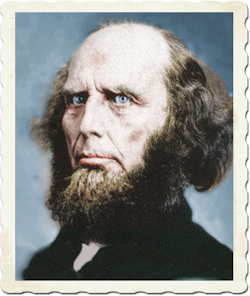
Charles Finney (1792-1875) ministered in the wake of the “Second Awakening,” as it has been called. A Presbyterian lawyer, Finney one day experienced “a mighty baptism of the Holy Ghost” which “like a wave of electricity going through and through me…seemed to come in waves of liquid love.” The next morning, he informed his first client of the day, “I have a retainer from the Lord Jesus Christ to plead his cause and I cannot plead yours.” Refusing to attend Princeton Seminary (or any seminary, for that matter), Finney began conducting revivals in upstate New York. One of his most popular sermons was, “Sinners Bound to Change Their Own Hearts.”… Read More

10 Lessons To Learn From The Life of John Calvin

From a well written biography of John Calvin by Bruce Gordon. This excerpt comes courtesy of Kevin Deyoung:

1. If you want to make an impact beyond your little lifespan, teach people the Bible. “What made Calvin Calvin, and not another sixteenth-century writer was his brilliance as a thinker and writer, and, above all, his ability to interpret the Bible” (viii).

2. The big public personalities are often privately awkward. “In the public arena Calvin walked and spoke with stunning confidence. In private he was, by his own admission, shy and awkward” (x).

3. We read too much causality into our childhoods. “With his contemporaries, and much in contrast to our age, Calvin did not consider his childhood as psychologically formative: it was a brief and brutal preparation for adulthood associated primarily with ignorance, volatility and waywardness” (2).

4. The best friendships are forged in fire. “All his life Calvin would define friendship in terms of a commitment to a common cause; it was within that framework that he was able to express fraternity and intimacy” (29).

5. True strength is knowing your weakness. “However, one of his greatest strengths in his later career was an acute awareness that despite remarkable confidence in his calling and intellect he remained dangerously prone to moments of poor judgment on account of anger” (91). Read More

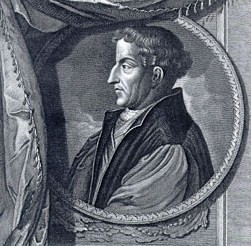
Who Was Martin Bucer?

He may have been apparently forgotten as a theological light weight but to the keen eye Martin Bucer’s role in the reformation was and is invaluable. Bucer was an ecclesial diplomat pastor with deep coherent theological conviction.

Martin Bucer played a part in the Reformation and his impact was in the city of Strasburg. Martin Bucer is not as well known as Martin Luther and John Calvin but he did make an impact on Strasburg until he was forced to flee the city.

Bucer was born on November 11th 1491. He was influenced by the Humanistic teachings of Erasmus and he read and accepted the arguments of Martin Luther. He had been a Dominican monk but he left in 1521 and became the chaplain to Franz von Sickingen, a protestant knight, and in 1522 became pastor of Landstuhl in the Palatinate. Here he married Elizabeth Silbereisen – a former nun. In 1523, Bucer became a minister in Strasburg where he preached in the cathedral.

Strasburg had long suffered from poor priests in terms of quality and absentee bishops. The city was also a major centre of the book trade so it was very susceptible to the influence of the printed word. The writings of Martin Luther and Melancthon were widely circulated and as early as 1521, preachers had arrived in Strasburg to “preach the pure Gospel”. Read More

Church History: Zwingli’s Abrasive Letter To Eck

This week in church history we take a break and courageously read through a letter that was written by Huldrych Zwingli. I would like to believe this letter never got mailed to the intended recipient a mischievous character called Johannes Eck.

“Look out, you impudent chap, now you will experience an examination which can’t be borne by you, but only by a Hercules. You actually deserve it, that one would hurl against you everything that gives insult, derision, and offense… Is it not almost insane that you think so much of yourself, that you write against me to the Confederation in such a shameless, rude and disgusting manner?

Were you born to cause only confusion everywhere? You lacked the strength to act, after you exposed your stupidity in the presence of all, and you also still need to abandon your wickedness, so that the world has not only Eck’s foolishness, but also his meanness for a very long time as a deterring example before its eyes…

Everything manifests externally what it is internally; whether you look like a human or like an ape on the outside. You are indeed in action nothing other than a cow. You still need, as it appears to me, and everyone else, to be broken like a mule or a donkey. I could never find a man more miserable than you, even if I scanned the whole of Germany… Oh, There’s More

So What is The Purpose of Church Discipline?

In this day when discipline is hard to institute in a church, its not that uncommon to find this long forsaken practice all together abandoned to the detriment of the body of Christ. So, what is the purpose of church discipline?

In such corrections and excommunications, the church has three ends in view.

The first is that they who lead a filthy and infamous life may not be called Christians, to the dishonor of God, as if his holy church [cf. Eph. 5:25-26] were a conspiracy of wicked and abandoned men.  For since the church itself is the body of Christ [Col. 1:24], it cannot be corrupted by such foul and decaying members without some disgrace falling upon its Head.

Therefore, that there may be no such thing in the church to brand its most sacred name with disgrace, they from whose wickedness infamy redounds to the Christian name must be banished from its family.  And here also we must preserve the order of the Lord’s Supper, that it may not be profaned by being administered indiscriminately.

For it is very true that he to whom its distribution has been committed, if he knowingly and willing admits an unworthy person whom he could rightfully turn away, is as guilty of sacrilege as if he had cast the Lord’s body to dogs.

On this account, Chrysostom gravely inveighs against priests who, fearing the power of great men, dare exclude no one.  “Blood,” he says, “will be required at your hands. [Ezek. 3:18; 33:8.]  If you fear a man, he will laugh at you; but if you fear God, you will be revered also among men.  Let us not dread the fasces, the purple, the crowns; here we have a greater power.  I truly would rather give my body to death, and let my blood be poured out, than participate in that pollution.”  Therefore, lest this most hallowed mystery be disgraced, discretion is very much needed in its distribution.  Yet this can be had only through the jurisdiction of the church. Read More

So Did Zwingli Ever Chuck The Keys of The Church Organ into The River?

Ever had those questions that kept you awake on Saturday nights? Well if those questions are about Huldrych Zwingli who better to ask than Dr. Jim West.

Every now and again I’ll be debunking myths and legends related to the life of Huldrych Zwingli.  That because 1) too few people actually read Zwingli.  And 2) too many people read about Zwingli in sources that aren’t always reliable.

It was related by a Professor of Church History to our undergrad class (back in the early 80′s) that when Zwingli rejected the playing of organs at Zurich’s churches that he took the key to the organ at the Grossmunster and tossed it in the Limmat, the river that bisects Zurich and empties into the Lake Zurich.

That Professor was wrong.  He was merely repeating a legend he had either heard or he made it up himself (the same way Scott Bailey does when he writes about Zwingli, by the way- evidently forgetting that Rev 21:8 proclaims that all liars have their place in the lake of fire). Read More

Biography: Dr Martyn Lloyd Jones

Dr Martyn Lloyd-Jones Video

This is a rare interview of David Martyn Lloyd-Jones (20 December 1899 – 1 March 1981) was a Welsh Protestant minister, preacher and medical doctor who was influential in the Reformed wing of the British evangelical movement in the 20th century.

For almost 30 years, he was the minister of Westminster Chapel in London. Read More

What Were The Confessions of St Augustine?

The grace of Christ, without which no body can be saved, is not bestowed on account of any virtues, but is given gratuitously, which is why it is called ‘grace’. The Reformation witnessed the ultimate triumph of Augustine’s doctrine of grace over the legacy of the Pelagian view of man. Luther and Calvin quoted Augustine. If we take Augustine at his word, his ability to write the Confessions (the name of an autobiographical work, consisting of 13 books) depends entirely upon the discovery of himself in conversion.  From the vantage of eleven years, the 44 year-old Bishop remembers clearly what transpired in his soul that resolved his wanderings and his intellectual discovery in an experience of conversion that informs all of his work for the church.  Understanding conversion is central to any understanding of Augustine. Read More

Heidelberg: What is thy only comfort in life and death?

I have always wanted to go through the Heidelberg Catechism from beginning to end. We once started as a family and it was great learning the precepts of Christian faith.  So, here I am once again reminding myself from the first principles. To begin with what is a catechism? It is in short a summary or exposition of doctrine. Heidelberg catechism was composed in Heidelberg at the request of Elector Frederick III, who ruled the Palatinate, an influential German province, from 1559 to 1576. The Catechism is an introduction to the Christian worldview and the basic teachings of the Bible; it is divided into fifty-two sections, called “Lord’s Days,” which were designed to be taught on each of the 52 Sundays of the year. Elders and deacons were required to subscribe and adhere to it, and ministers were required to preach on a section of the Catechism each Sunday so as to increase the often poor theological knowledge of the church members. This catechism or exposition of doctrine follows the outline of the book of Romans and thus clearly explains the gospel by hitting on the main points of man’s sin, Christ’s redemption and man’s gratitude. Read more of this post