A Twisted Crown of Thorns ®

Reformed. Christianity. Evangelism. Modern Culture.

A Quiz For My Arminian Friends

I hope this Theology quiz goes the distance to help you understand your Bible and appreciate that God is the author of salvation. He alone can sustain a Christian and will complete the work He started on the day He glorifies him.

Depression: Who Does A Pastor Confide in?

While the list of considerations for pastors facing depression far exceeds what can be covered in a single article, here is a piece featured by Gospel Coalition that serves as a good guideline…

1.If married, have you shared this struggle with your spouse?

Men in general tend to wrestle with transparency when it comes to personal struggle. When depression is involved, fear of appearing weak or less spiritual might incline a husband toward silence and isolation. …Read More!

Poor Mark’s Back in The Repentance Corner.

Pastor Mark Driscoll was the subject of discussion in many blogs recently. I will not repeat the issues of contention (and neither will I link to them) but it seems the elders in his church have taken him to the wood shed and left him with a flea in his ear, he is now in the repentance corner…again.

Repentance Corner?

I then put a flippant comment on Facebook, and a raging debate on gender and related issues ensued. As a man under authority, my executive elders sat me down and said I need to do better by hitting real issues with real content in a real context. And, they’re right. Praise God I have elders who keep me accountable and that I am under authority.

The question that some circles will always keep bringing up is: What else shall we do in order to reach a generation weaned on Ultimate Fighting, South Park, and hip-hop?

At least one excuse has been scrawled off the wall -thanks to Mark. When talking to men about church, no more doodling and twiddling thumbs about macho bible heroes as draw strings like David being “a warrior king who started killing people as a boy and who was also a songwriter and musician”.

Just preach the gospel, Mark. It is still the power of God for salvation both for the blue and  white collared guys…and the effeminate ones too.

Conundrums: Did Jesus Go To Hell Between his Death And Resurrection?

Joyce Meyer and several other preachers say that Jesus suffered in hell. My good friend Tim Prussic got stuck with the same question when going through the Apostle’s Creed in the Heidelberg catechism. So I decided to look for afew answers to this conundrum. So did Jesus go to hell or not? Well here is something to munch on (get your bible closer too)….

There is a great deal of confusion in regards to this question. This concept comes primarily from the Apostles’ Creed, which states, “He descended into hell.” There are also a few Scriptures which, depending on how they are translated, describe Jesus going to “hell.” In studying this issue, it is important to first understand what the Bible teaches about the realm of the dead. …Read More!

Why More Churches Are Resorting To Movie Packages, Entertainment and More Entertainment.

Is real good solid bible teaching on a downward spiral? Or are we too sedated to recall the words of Dr Martin Lloyd Jones and we haven’t noticed that….

“As preaching has waned, there has been an increase in the formal element in the service. It is interesting to observe how Free-Church men, non-Episcopalians, whatever you may call them, have been increasingly borrowing these ideas from the Episcopal type of service as preaching has waned. They have argued that the people should have a greater part in the service and so they have introduced “responsive reading”, and more and more music and singing and chanting. …Read More!

O Men of Australia: I Perceive in Every Way You Are Very Religious…

It is said that if you want to know what a people in a place are,you have to look at  the content of their most popular pass times, poems or music. Paul in his famous visit to Athens (Acts 17) strolls through the place and gets distressed as he sees a city riddled with idols.  This eventually leads to his famous discourse at the Areopagus before the dilettante philosophers of the day.

So, if Paul strolled in to a modern day metropolis like Sydney, Australia today and looked at the front news papers or sampled their culture what impression would he get? Surely he would be proud of them.  Afterall haven’t you heard that even….

A local church’s latest album is outselling those of celebrated pop stars Beyonce and Lady GaGa. …Read More!

Challenges of A Twenty First Century Pastor

With newer versions of the Bible coming out every week, some changing references to God to gender neutral pronouns while others adding and deleting whole portions of scripture, is n’t it endless the mountain of references we would like to alter to make us feel cosier…abit more self righteous? Less sinful, perhaps… …Read More!

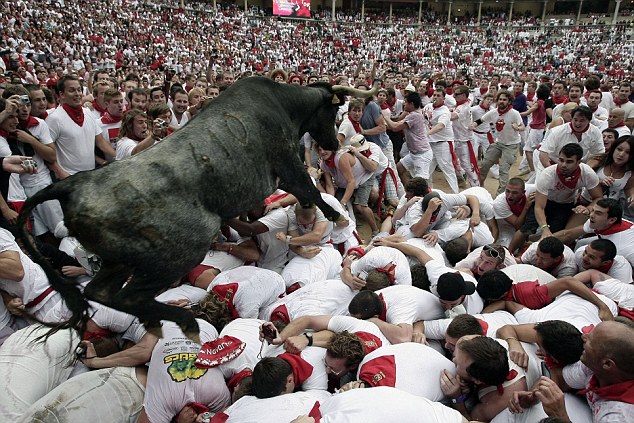
The Bulls of Bashan And The Pamplona.

Recently all eyes were turned to the Pamplona. What? Haven’t you heard of the bulls of Pamplona? A game and ritual played out by the bravest and most daring of men whereby….

Thousands of thrill-seekers dashed ahead of six fighting bulls in the streets of the northern Spanish city of Pamplona today in the first running of the bulls in this year’s San Fermin festival.

Miraculously no one was gored, but one person was hospitalized after falling in the sprint, said Spanish Red Cross spokesman Jose Aldaba. In all, four people needed treatment by medical staff. …Read More!

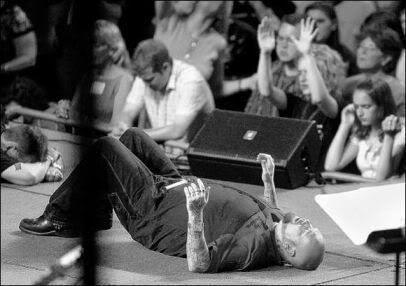
But Hey You Used to Speak in Tongues, So What Happened?

For many Reformed Christian friends who at one time were non-cessationists [and spoke in tongues as vibrant and enthusiastic charismatics] and  later became cessationist, this is a very common question that always gets thrown your way. But like any answer to any question about any Christian practices we must always base our answers on what the bible says. So, do I still speak in tongues? Samuel Say answers….

No I do not and cannot speak in tongues. I use to practise what I thought was tongues, but by the grace of God I learned through prayer and biblical study that I was deceived. Here is my answer to a question I received about tongues several months ago:

1. Is the gift of tongues a spiritual language?
2. Is the gift of tongues a form of prayer?
3. Can man speak in tongues whenever he wants to? …Read More!

I Beseech Euodias And Syntyche To Agree In The Lord

When I get to heaven by the grace of the Lord, I want to hunt down two Bible characters and let them know that their names were embedded in Holy writ for having a squabble. I truly wonder what Euodias and Syntyche (nice names, uh?) were in disagreement about (Phil 4:2). What do we do when we run against euodiasian or syntycherous views in church? Here is a little wisodm for life on how to draw a distinction between a debatable or disputable matter…

A debatable or disputable matter (Romans 14:1) is an area of behavior, doctrine or tradition on which Christians disagree because a specific biblical absolute does not regulate it. It is therefore a matter of personal preference not divine command. These matters belong to the category of Christian freedom or liberty. …Read More!

South Sudan Anthem: Oh God We Praise And Glorify You…

Finally a new nation has been born in the heart of Africa. Most of the photos and news reports from this part of Africa (Cush) have always centered on wars, famine, plagues and cries for justice as the world watched a nation bathed in religious intolerance descend into anarchy. But latest reports now broadcast news with a different ring to it….

South Sudan [9th July2011] has become the world’s newest nation, the climax of a process made possible by the 2005 peace deal that ended a long and bloody civil war.

Sudan’s President Omar al-Bashir and UN Secretary General Ban Ki-moon are among international dignitaries attending celebrations in the capital, Juba.

Sudan earlier became the first state to officially recognise its new neighbour.

The south’s independence follows decades of conflict with the north in which some 1.5 million people died. ~BBC News    

Now we can go and freely preach the gospel in South Sudan. We can tell them of God’s grace through Christ Jesus. Hey, if God has opened up this door, what do you think will happen if we begin to pray for North Korea?

In the words of John Knox, “Oh God give me [North Korea] or I die!” ….Read More

Real House Wives of The Bible Seem to Have Left The Gospel Out Too?

Trying to take a peek into the lives of Western Christians? Well hope you have the money to purchase their videos first. There was once a time when evangelists did what the name said – proclaimed the good news of the gospel. No. Not evangelist Ty Adams who has come up with a creative way of making money while entertaining the flock. You see…

Ty Adams, evangelist author and web-based Christian advice columnist, is working on another Real Housewives franchise:The Real Housewives of the Bible. Yes ladies and gents, the Bible. Wait, what state is that in? …Read More!

The Uh, Uncompleted Work of Christ…

Thanks to one of my Face book friends (Mark Todhunter) for the quote of the week….

If the Arminians are right, instead of “It is finished” Jesus should have said “So far so good…now it is up to them” – Dan Phillips

13 Signs Your Sermon is NOT Going Well…

Couldn’t help chuckling over this list by Mike Wittmer about signs your sermon is not going well…

13.  Your associate pastor is warming up in the bullpen.

12.  The praise band begins playing you off the stage. …Read More!

Understanding FC Barcelona Football Tactics

This is a stand alone post. It basically gives you a crash course in understanding football tactics. The team in focus is Fc Barcelona.

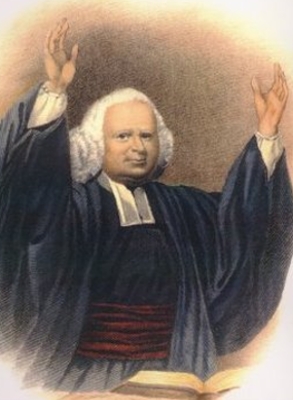
George Whitefield To John Wesley: Error Must Be Opposed

The tension between two great evangelical ministers can never be profound yet graciously loving than the public and personal tensions between George Whitefield and John Wesley. On one front one would easily have had the impression that these two would never even share a drink at a communion table. The most surprising twist was that George Whitefield actually asked Mr Wesley to eulogize at his funeral. But did that bury the proverbial hatchet? Did Whitefield eventually roll over and accept defeat to Wesley? Far from it. Iain Murray in this article rightly summarises this unique conundrum:

George Whitefield

    The occasion and background of [Whitefield’s letter to Wesley] requires a few words of explanation. From the time of his conversion in 1735, Whitefield had been profoundly conscious of man’s entire depravity, his need of the new birth, and the fact that God can save and God alone. Describing an experience which occurred a few weeks after his conversion, he wrote: “About this time God was pleased to enlighten my soul, and bring me into the knowledge of His free grace . . .” Strengthened by his reading of the Scriptures, the Reformers and the Puritans, Whitefield gradually grasped the great related chain of truths revealed in the New Testament—the Father’s electing love, Christ’s substitutionary death on behalf of those whom the Father had given Him, and the Spirit’s infallible work in bringing to salvation those for whom it was appointed. These doctrines of “free grace” were the essential theology of his ministry from the very first and consequently the theology of the movement which began under his preaching in 1737. …There’s More!

Iran: Pray For Pastor Youcef As Death Sentence is Upheld.

Remember Youcef Nadarkhani, the pastor from Rasht, about 750 miles northwest of Tehran, who was arrested in October 2009?  Well the case was taken to the Supreme Court, and [don’t rejoice yet]…

The Iranian Supreme Court has upheld the death sentence of a pastor convicted of apostasy and accused of evangelizing Muslims. Pastor Youcef Nadarkhani, 34, has been in prison since October 2009, and the appeal of his death sentence was rejected by the Iranian Supreme Court on June 28, 2011. He is to be executed by hanging. If the death sentence is carried out, it will be …Read More!

Conspiracy of Hush-Hush and Nudge-Nudge Among Charismatic Leaders?

So many Christians are confused by the theology and the experiences of Charismatic people. This cannot be avoided as they are the most medially visible expression of “Christianity” thanks to Christian television providing such a tremendous platform in the last fifty years. To critique Charismatic doctrine or practice is commonly viewed as inherently unloving, inherently unkind, inherently divisive and even blasphemous. And could it be that this disregard for brotherly correction has led to the autonomous leaders who are now descending to extremes of moral and scriptural depravity?

This honestly soul searching article has been excerpted from the latest issue of Charisma Magazine; it is a must read for Charismatic leaders [as well as non- Charismatics]…

The church has had enough spin, denial and closed-door settlements. Leaders must demonstrate humility and repentance.

A few years ago a minister in my city went through a divorce, and the messy details of the settlement between the pastor and his wife were reported in our newspaper. But when the divorce was finalized there was no public statement. The man’s wife disappeared from the stage, her photo vanished from the church website and nothing further was said. Zip. Nada. No comment.

The message: It’s none of your business what happened between the pastor and his wife. He’s the anointed messenger of God. Just follow him. …Read More!

The Piety of an Underzealous African Pastor.

A certain wise man once said:

“The pious mind must ascend still higher, namely, whither Christ calls his disciples when he says, that every one of them must “take up his cross,” (Mt. 16:24). Those whom the Lord has chosen and honoured with his intercourse must prepare for a hard, laborious, troubled life, a life full of many and various kinds of evils; it being the will of our heavenly Father to exercise his people in this way while putting them to the proof. Having begun this course with Christ the first-born, he continues it towards all his children.”

Well, that man was a pastor called John Calvin in the 16th Century.

Several years later (okay five centuries or more later) a new breed of suave pastors has cropped up. They seem to have conveniently swapped spiritual piety for earthly notoriety. No longer do they say the “Lord is my shepherd” for they already have had their  fill beside sprinkler automated plastic astro -turf.

You see, in Africa  apparently…

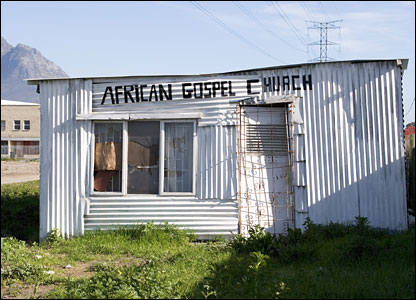
An African Church

A few wealthy Nigerians spent at least $225 million acquiring private jets between March 2010 and March 2011, a Nigerian newspaper reported…

Apart from wealthy business tycoons, Nigerian clergymen and spiritual leaders are also joining the very elite league of jet owners. …Read More!

A Watch Night Service: Spurgeon in Prayer

Charles Spurgeon is remembered for his fervent preaching. Today I will feature a prayer he made just before he preached on a passage in Lamentations (Lam 2:19) – when Jeremiah the weeping the prophet  had wept his eyes dry for the slain of the daughter of his people; and when he had done all he could himself to pour out tears for poor Jerusalem, he then begged Jerusalem to weep for herself.

Jeremiah by Michaelangelo

O God, save my people! Save my people! A solemn charge hast thou given to thy servant. Ah! Lord, it is all too solemn for such a child. Help him; help him by thine own grace, to discharge it as he ought.

O Lord, let thy servant confess that he feels that his prayers are not as earnest as they should be for his people’s souls; that he does not preach so frequently as he ought, with that fire, that energy, that true love to men’s souls. But O Lord, damn not the hearers for the preacher’s sin. Oh, destroy not the flock for the shepherd’s iniquity. Have mercy on them, good Lord, have mercy on them, O Lord, have mercy on them!

There are some, Father, that will not have mercy on themselves. How have we preached to them, and laboured for them! O God thou knowest that I lie not. How have I striven for them, that they might be saved! But the heart is too hard for man to melt, and the soul made of iron too hard for flesh and blood to render soft. O God, the God of Israel, thou canst save. There is the pastor’s hope; there is the minister’s trust. He cannot but thou canst, Lord; they will not come, but thou canst make them willing in the day of thy power. Read More

Missionaries: Remembering The Always Sick Missionary David Brainerd

David Brainerd (1718-1747) was a missionary to the American Indians in New York, New Jersey, and eastern Pennsylvania. Born in Connecticut in 1718, he died of tuberculosis at the age of twenty-nine. During his short life he was beset by many difficulties. As a result, his biography has become a source of inspiration and encouragement to many Christians, including missionaries such as William Carey and Jim Elliot, and Brainerd’s cousin,  evangelist James Brainerd Taylor (1801–1829).

David Brainerd

He enrolled at Yale. In his second year at Yale, he was sent home because he was suffering from a serious illness that caused him to spit blood. It is now believed that he was suffering from tuberculosis, the disease which would lead to his death seven years later. Brainerd began working as a missionary to Native Americans, which he would continue until late 1746 when worsening illness prevented him from working. This illness, generally considered to be tuberculosis, had begun to affect him at Yale, but worsened when he entered the mission field. In his final years, he also suffered from a form of depression that was sometimes immobilising and which, on at least twenty-two occasions, led him to wish for death. He was also affected by difficulties faced by other missionaries of the period, such as loneliness and lack of food. Here are few words of wisdom from David Brainerd while in the mission field:

“Oh, that I could dedicate my all to God. This is all the return I can make Him.”

“It is impossible for any rational creature to be happy without acting all for God. God Himself could not make him happy any other way… There is nothing in the world worth living for but doing good and finishing God’s work, doing the work that Christ did. I see nothing else in the world that can yield any satisfaction besides living to God, pleasing Him, and doing his whole will.”

“Here am I, send me; send me to the ends of the earth; send me to the rough, the savage pagans of the wilderness; send me from all that is called comfort on earth; send me even to death itself, if it be but in Thy service, and to promote Thy kingdom.”

“My desires seem especially to be after weanedness from the world, perfect deadness to it, and that I may be crucified to all its allurements. My soul desires to feel itself more of a pilgrim and a stranger here below, that nothing may divert me from pressing through the lonely desert, till I arrive at my Father’s house.” …Read More!

Is it a Sin For a Christian To Join The Illuminati And Freemasons? Duh!

We have always lived relatively sophisticated societies (unless of course you believe we evolved from some premeval soup left by some circumstantial science experiment bang). Yet even in the visible community there are many invisible associations and friendships and fraternities. Some overtly maintain the calm innocence of  a sunday school toddlers group and others covertly subtle and far from innocent.

Syncretism is the word for the day. This is the attempted blending of irreconcilable principles. Needless to say religious syncretism is the attempt to harmonise the true religion with any of the many false religions of the world. This is the basis upon which many secret organizatons such as the Order of Freemasons (also called Masonic Lodge). And this brings us to the essence of the First Commandment and what the very commandment warns us about. …Read More!

Infant Salvation: Comfort From The Bible When A Baby Dies.

A Christian friend of mine recently shared with me how they lost their first born child through a miscarriage and it’s distressing emotional impact on the family. As I pondered on this he threw at me the one question I had hoped he would not ask. Do you think babies go to heaven when they die? I said yes. But to try to explain, and reconcile total depravity with infant salvation, I thought I would end up sounding universalist. That night I decided I would search the scriptures and see what comfort God’s word  offers in  this delicate area. This article by Jeff Spry has been the biggest eye opener and may it lead you to understand the Sovereignty of God and also his grace in salvation of Adam’s helpless race….

Tragedy surrounds us. We hear of it every day on the evening news. We read about it in the newspaper and the internet. We witness it in the lives around us. Many, if not all of us, have experienced tragedy in our own lives. However, there is one tragedy that is profoundly heartbreaking – the death of an infant or young child. Ever since Adam and Eve found the limp body of their son Abel, this must be the greatest grief known to man.

For those who have not had to face this situation personally, many have been called upon to offer support for others. Perhaps you sat quietly with a grieving mother, who suddenly asked, “Is my baby in heaven?” Read More!

Has Sting The Wrestler Had A God Encounter?

Wrestling star Steve “Sting” Borden is currently promoting his recently released direct to DVD “Christian” movie aptly titled The Encounter. So, what is it about?

“It’s about five people traveling down a road, and due to weather they all get stuck. They end up at a diner, which maybe one or two of them saw, and the rest of them never did. They go into the diner and have an encounter with a guy named Jesus, who actually ends up being Jesus Christ…” ~Sting

Steve may be a lovely character (I am not questioning his testimony) and this movie may actually even be a thrilling block buster but it is high time the evangelical church became less gullible and more discerning with what is presented to it. …Read More!

America Butchers Up Pledge of Allegiance Because of “God”.

When America’s puritan fore fathers departed Europe on board the Mayflower in 1620 they were determined to set up this idyllic nation (America) that would be the land of the free with one nation under God. They then set up large institutions of education like Harvard and Yale and many others so that people would learn to read and write and study the word of God and live meaningfully to the glory of God.

Unfortunately America no longer espouses this so called “God” any more. The fickle leaven of prosperity has brought with it an unbelief in this God that borders rank paganism. Now a deem shadow of what the founding fathers ever envisioned, has this once great nation  began its systematic deliberate decline into the cesspit of self destruction?

This recent news story clipping  summarises the moral turmoil in America …

Signing the declaration of independence...

Atheist Michael Newdow has been pestering the courts to rule that the phrase “under God,” found in the Pledge of Allegiance, and “In God We Trust,” imprinted and stamped on our currency, are unconstitutional. In 2010, even the usually liberal San Francisco-based 9th U.S. Circuit Court of Appeals rejected Newdow’s legal challenges that the references to God are unconstitutional and infringe on his religious beliefs. On June 13, 2011, the Supreme Court refused to review Newdow’s challenge to the lower court’s ruling (also see here).

These court decisions don’t tell the whole story. There’s something sinister going on in our nation. Three times in one month in 2010, President Obama left out a very important qualification about the source of our rights when he cited a portion of the Declaration of Independence. He said that “each of us are [sic] endowed with certain inalienable rights, that among these are life, liberty and the pursuit of happiness.” The complete text of the Declaration includes the phrase “endowed by their Creator with certain inalienable rights.” The use of “Creator” specifies to everyone everywhere that rights are not granted by the will of the majority or the legislative action of the government but are a gift – an endowment – from God. …Read More!

More Than Misery Is A Jail with A Juice Bar…

The West Minster Shorter catechism asks a very pertinent question: Wherein consists the sinfulness of that estate whereinto man fell? The answer: The sinfulness of that estate whereinto man fell, consists in the guilt of Adam’s first sin, the want of original righteousness, and the corruption of his whole nature, which is commonly called Original Sin; together with all actual transgressions which proceed from it.

Indeed man is fallen, miserable, totally corrupted in his inner nature, depraved and continually wicked. That were it not for God’s grace holding back some evil in the world things would have been a whole lot worse. How does God do this you may ask?

  • For God has left in sinful man the working of conscience (Rom 2:15)
  • Another thing that helps hold men back is the fear of death. (Heb 2:15)
  • God has put in the world to keep sinners from doing wicked things the power of civil government. Rulers are set in the world by God as a terror to evil men. (Rom 13:1-5)
  • The influence of family, education and society.

But what happens when society, civil government and justice system are fractured? Then you brace your self for more than misery

Soft Justice...

Newton Aycliffe, United Kingdom: SOME of Britain’s most dangerous young criminals — including killers and rapists — are moving into a new £14million “jail” kitted out like a four-star hotel. …Read More!

Get your Bibles Out -It’s The (TSSV) Today’s Seeker-Sensitive Version!

In the never ending quest to produce the perfectly “relevant” Bible, I think we just made one big leap for man-kind [and one small step for God]. In a web exclusive I bring to you an excerpt of Paul’s letter to Timothy ….

2 Timothy 4:1-5 (TSSV) Today's Seeker-Sensitive Version  2 Timothy 4:1-5 (TSSV) Today’s Seeker-Sensitive Version

1. I solemnly charge you in the presence of God and Christ Jesus, who is the only one who can judge us, and by His appearing and His kingdom:

2. preach the gospel; be ready to be relevant to the needs of the un-churched; be excellent in all that you do, uplift each other with life changing events, worship the Lord above all, and do not cause division within the church because of doctrine. …There’s More!

How To Scare Church Members With A Law You Can’t Keep.


Is  tithing [click here for comprehensive article on tithing] for the New Testament believer? Don’t bother to tell me that giving is good. We know that. Will you tell me then that tithing gets you in the habit of giving so that God can anoint you? Here is a transcript of a popular mega church pastor, television prosperity teacher and personality explaining the importance of the tithe in maintaining…[oh just read on before I spoil it for you]

Creflo Dollar: Now, you know, we’re under the Blood of Jesus, so we can’t shoot and stone people like we used to. All we have to do is repent and God will forgive us and take us where we need to be. But I can tell you, man, if it wasn’t for the Blood, there’d be a whole lot of us being stoned and being in Hell right now over the tithe. But for [“if not for”?] the Blood of Jesus, we’d be doomed.

I mean, I thought about when we first built “The Dome,” I wanted to put some of those little moving bars and give everybody a little card. They’d stick it in a little computer slot. If they were tithing, beautiful music would go off and, you know, [Creflo sings] “Welcome, welcome, welcome to the World Dome.” [Congregation laughs.]

But…if they were non-tithers, the bar would lock up, the red and blue lights would start going, the siren would go off, and a voice would go out throughout the entire dome, “Crook, crook, crook, crook!” …Read More!

We All Start Arminian -Don’t We?

John Pedersen writes a deeply passionate plea outlining his concerns and fears during his transition from Arminianism to Reformed theology.

“If Arminianism is so evil, why did many Reformed believers start their Christian lives as Arminians, as Christians who believed in “free will”? I myself was a believer in “free will” Arminianism for years, and it was a long and painful journey for me to finally see the biblical basis for the doctrines of grace.”

“All those years, I read my Bible, prayed, and sought the salvation of my friends and loved ones, just as I do now. My transition to Calvinism was somewhat reluctant, but the inevitable result of Christian maturity, good Reformed books, and the patience and godly example of Reformed believers who did not castigate me for my free will beliefs but encouraged me to see the greater richness and deep biblical truths of Reformed doctrine.”

“I was loved into the Reformed Faith; not condemned into it. …Read More!

Hey If I Were John MacArthur…

I have enjoyed Grace To You podcasts while half asleep on the train, while bleary eyed walking out of the Emergency Room and when chasing stray cats away from the back garden on weekends. Needless to say I have come to respect and love John MacArthur for his love for the gospel. But wait a minute, thats not all….

If I were John MacArthur, for one thing, I’d be able to throw a football further than anyone reading this post. But I would also be faced with a conundrum of existential proportions: What’s next?

[Recently], to the sound of thunderous ovation, Dr. MacArthur completed the expository preacher’s equivalent of landing on the moon. They say the space shuttle carrying Armstrong employed less technology than a modern coffee machine. By finishing the Gospel of Mark, MacArthur has preached on every verse of the New Testament, using less technology than a typewriter (a rollerball was his instrument of choice to handwrite every one of his thousands of sermons). 

For 43 years John tunneled his way with a worm’s-eye-view of the Greek grammar and syntax each week in his tiny home study, so that he could share the mined wealth of insight with a hungry congregation of 6000 members, and a waiting planet of innumerable Grace To You listeners. He set out to achieve this goal early in his ministry. It must have been the confidence of youth, bolstered by pro football and baseball scouts desperately wooing him, which fueled his “dream big” mentality.

A lesson learned: If your checklist for success is as mundane as “Big house, small wife, two cars parked outside a two-car garage full of junk, and a couple of kids” you set yourself up for midlife crisis. Either you attain your underwhelming goal and think, like the preacher in Ecclesiastes, “Is this it?” resulting in the purchase of a Harley Davidson, hair transplants, or home renovation. Or you fail to attain your dream of mainstream mediocrity and…find solace in the company of new friends like Prozac or Jack Daniels. …Hee hee. Read More!

More Trivia Answers!

Ha ha! Again you decided to take the easy option and look at the answers!

A: Where is the only place in the Bible where “Hats” are mentioned? (Daniel 3:21)
B: What king had the first birthday party in the Bible? (Pharaoh Gen 40:20)
C: What group of people in the Bible died because they could not pronounce the letter “H”? Judges 12:6
D: Whose hair weight from about 5 to 6 pounds at his annual haircut? Absalom 2 Samuel 14:26

Trivia Answers!!

I see you have given up, taken the easy route and decided to peek at the answers. Okay, here you go:

A: What is the shortest verse in the Old Testament? (1Chronicles 1:25)

B: Where in the Bible do you find a father who had 88 children? (2Chron. 11:21)

C: Saul was the first king of Israel.  Who was the second? (Ishbosheth   2 Sam. 2:10)

D: Who is the only person in the Old Testament mentioned as being buried in a coffin? (Joseph)

E: How many times does Eve’s name appear in Genesis? (Twice)

F: Who are the only three angels mentioned in the Bible by name? (Michael, Gabriel and Lucifer)

G: Who had a vision of one angel running to meet another? (Zechariah Zechariah 2: 3)

H: The word “God” appears in every book of the Bible except in which two books? (Esther and Song of Solomon)

I: Where is the longest verse in the bible? (Esther 8:9)

J: Which verse in the Bible contains all letters of the alphabet except Q? (Daniel 4:37)

Well here is a bonus set of easy Bible questions. I know you will do well now 🙂

A: Where is the only place in the Bible where “Hats” are mentioned?
B: What king had the first birthday party in the Bible?
C: What group of people in the Bible died because they could not pronounce the letter “H”?
D: Whose hair weight from about 5 to 6 pounds at his annual haircut?  (check here for answers)

What Would Zwingli Say About Movie Sermon Series In Church?

Ever wondered what the apostles or even the reformers would say if they attended a modern day church service? Okay, what if they strolled into a mega church movie sermon series or sat and watched  christian television. Would they agree with our shenanigans (read eisegesis)? How about Zwingli, that feisty almost unsang hero of the reformation  would he have a fit? I think [chuckling now] I know:

First you need to dispense with the notion that what you read into Scripture is what’s there.  Such a view is quite pointless as I will clearly show.  I know that you will insist that you have worked through Scripture and uncovered texts which support your point of view.  And here we hit at the disease of the human heart …Read More!

The Day Televangelists Started Making Home Visits To The Sick And Elderly

Thabiti Anyabwile describes a very common scenario. [A local pastor] told his congregation, “I am amazed at how I can teach you something from the Scripture and you pay little attention to it. But if you hear the same thing said from some television preacher, you act as though it’s the first time they’ve heard it and you’ll send them all your money for it.”

This pastor is a faithful man. He has pastored this church for over 35 years. Every Sunday following the morning service, he gathers his deacons and they visit the many elderly members of the church in their homes. Hardly a person has ever been hospitalized for any length of time that he has not visited to pray and console. He is the model of the faithful country pastor.

So, it’s all the more amazing to me (Thabiti continues) that his people would rather trust the words and teachings of television preachers over his teaching and lived out example… most television ministries are a pox on God’s people.

Now, that’s no new, groundbreaking comment. Many have lamented the scandals of famous televangelists and the abhorrent theology of many popular TV ministries. But, I think I’m realizing that their effect on the people of God is deeper than I once thought. Just a few things come to mind…. Read More!

God’s Wit: Unwitting and Unwilling Man

A very interesting post by Andy Underhile on God’s sovereignty:

John 11:49-52 tells us, “But one of them, Caiaphas, who was high priest that year, said to them, “You know nothing at all. Nor do you understand that it is better for you that one man should die for the people, not that the whole nation should perish.” He did not say this of his own accord, but being high priest that year he prophesied that Jesus would die for the nation, and not for the nation only, but also to gather into one the children of God who are scattered abroad.”
This is an amazing text. It demonstrates, quite emphatically the sovereignty of God over men’s wills – even over the wicked. Even enemies of God, who hate Him and wish to rebel against His will, are still under His sovereign power and cannot so much as move apart from Him. Moreover, they are often used, unwittingly and unwillingly, as instruments for the very plans of God they wish to frustrate. …Read More!

Er, Seeker How Do you like Your Church?

A “seeker-sensitive” church is a church whose main purpose is to try to make the church look more attractive to unbelievers. Many churches use technology and media to drive outreach to the communities. Most say this is a powerful outreach tool, but the effects of it can, and will, be very unhealthy for the church as a whole. Read More

Well You Might Just Be A Calvinist If…

On a lighter note I hope this keeps you chuckling in bed tonight:

You Might Just Be A Calvinist If….

If your child’s first word was “Westminster”… you just might be a Calvinist.

If your 4 year old can explain what the word “propitiation” means… you might just be a Calvinist.

If you send your mother tulips on Mother’s Day… you might be a Calvinist.

If your passion for evangelism blows away your Arminian friends… you might just be a (true) Calvinist.

If you cringe every time you hear someone proclaim “God loves you and has a wonderful plan for your life! Choose Jesus!”… you might be a Calvinist.

If you’ve ever wanted to attend a Benny Hinn crusade just so you could stand up and shout “Ichabod!!”… you might just be a Calvinist.

If you purposefully read a book to be convicted… you might just be a Calvinist.

If you have to order theological books online because no one at the Christian bookstore has ever heard of them… you might just be a Calvinist. There’s More

Would You Kick (Smart) Mr Thompson Out of Church?

Have you ever asked yourself the question: Is church for believers or non believers? In which case if there are non believers in attendance will you alter your proceedings and message to make them as comfortable as possible? Or will your worship and adoration of your Lord and saviour continue with the reverence and orderliness that goes with congregational worship?

There was a time when church (ekklesia) referred to the body of Christ. And the Lord added to their number those who were being saved. A time when the church was referred to as the bride of Christ. Called to be set apart -for the groom. But in these days of seeker sensitive church models every person feels they have a right to do what ever they want. Or so thought this disgruntled church hopper. There’s More

Can You Be So…So Anointed And Attain Sinless Perfection?

Early in my Christian walk I was taught and made to believe several  things. Like one can be anointed (yeah that elusive word once again ) to the point that they soar to a higher level of grace than others and henceforth attain levels of sanctification that endow them with a state of sinless perfection. Well, the title question above delves into this mystic doctrine of sinless perfection. Is it biblical? If not where does it err? I came across this brilliant article by Reese Currie and I hope it will answer   a few questions for some:

Attaining higher piety?

I [Reese Currie] have been receiving an increased volume of e-mail lately from proponents of “sinless perfection” doctrine in response to my article, “Can We Live Sin Free?” None of these supposedly sinless folks offer any argumentation from the Bible, since the doctrine they espouse can’t be found there, but yet they seem quite concerned that I’m doing terrible things to peoples’ Christian walk in maintaining that humans never attain sinless perfection. I am, according to one writer, “an agent of Satan” holding back the true believers in Christ, and should “seek God and be taught of Him.”

Obviously, another article on this is required, since the first, although quite laden with Biblical facts on the matter, does not dissuade these people from e-mailing me to label me a heretic, unknowledgeable, and “Satan’s agent.” So, I offer these facts about people who advocate “sinless perfection.” …Read More!

The Gospel: Are We Clearly Missional or Clearly on A Mission?

There is some times a rather lax and laid back mood in some evangelical circles as to how to clearly preach or present the gospel. “Preach the gospel, if necessary use words,” they shout. Some say we should be “missional” (read doing several lovely things i.e social justice, poverty eradication) and they have altogether dropped the word “missions”. I think we as Christians should never forget that we have been commanded to preach the gospel -for it alone is the power of God unto salvation.

Imagine the embarrassment that comes when your impressed neighbour eventually asks you, “so lovely, hard working christian missional guy who has for the last twenty years mowed my lawn, washed my cat, given my poodle a pedicure; what is the hope that lies in thee?”  And we stare back blankly; barely remembering why we even started such generous endevours. There is value (if we are evangelical) in being clear in our mission as well as our communication  – as this clip (though satirical) demonstrates:

“If sinners be damned, at least let them leap to Hell over our bodies. If they will perish, let them perish with our arms about their knees. Let no one go there unwarned and unprayed for.” ~Charles H. Spurgeon …Read More!

What Happened At The Transfiguration?

A short piece on the Transfiguration:

Mountain top experience -Mount Everest

It was about a week after Peter’s momentous confession of Jesus as the Christ at Caesare Philippi that Jesus took him up a high mountain, together with James and John. As Mark tells the story of what happened (Mark ix. 2-8), it is not difficult to discern behind his thirdpersonal narrative the account which Peter himself was accustomed to give in the first person. If we change ‘they’ and ‘them’ to ‘we’ and ‘us’, and put the pronoun ‘I’ in place of Peter’, this is the result:

‘He was transfigured before us, and his garments became glistening, intensely white, as no fuller on earth could bleach them. And there appeared to us Elijah with Moses; and they were talking to Jesus. And I said to Jesus, “Master, it is well that we are here; let us make three booths, one for you and one for Moses and one for Elijah.” For I did not know what to say, for we were exceedingly afraid. And a cloud overshadowed us. and a voice came out of the cloud, ‘This is my beloved Son; listen to him.” And suddenly looking around we no longer saw any one with us but Jesus only.’ Read More!

Video: Justin Peters On Word of Faith Theology

Justin Peter‘s A Call For Discernment: A Biblical critique of the Word of Faith Movement. Read More

The Ever Changing Hermeneutics of The “Stop” Sign.

It seems I am the last one to always discover interesting bits on the net. Like this one…a little parable about hermeueutics, the art of interpretation (especially biblical interpretation), applied to a “Stop” sign:

Moroccan Stop Sign

1. A postmodernist deconstructs the sign by knocking it over with his car, and thus ends the tyranny of the north-south traffic over the east-west traffic.

2. The Marxist refuses to stop because she sees the stop sign as an instrument of class conflict, since the bourgeois use the north-south route and obstruct the proletariat moving east-west.

3. A serious and educated Catholic rolls through the intersection because he believes he cannot understand the stop sign apart from its interpretive community and tradition. Observing that the interpretive community doesn’t take it too seriously, he doesn’t feel obligated to take it too seriously either.

4. Average Catholics and mainline denominationalists don’t bother to read the sign but will stop if the car in front does. …There’s More!

You May Be A Carnal Christian If You Believe In…

It is said that many regularly occupy church pews, fill church rolls, and are intellectually acquainted with the facts of the gospel but never strike one blow for Christ. They seem to be at peace with his enemies. They have no quarrel with sin and, apart from a few sentimental expressions about Christ, there is no biblical evidence that they have experienced anything of the power of the gospel in their lives. Superficially called by the oxymoron ‘carnal christians’ but why are they called so when the bible never uses such a term?  To believe in carnal christianity (sic) you have to force your self to  make 9 serious errors in doctrine:

1. The misuse of I Corinthians 3

This ‘carnal Christian’ doctrine depends upon a wrong interpretation and application of 1 Corinthians 3:1-4, ‘And I, brethren, could not speak unto you as unto spiritual, but as unto carnal, even as unto babes in Christ… are ye not carnal?’ To understand the true meaning of these words it should be remembered that 1 Corinthians is not primarily a doctrinal epistle…

In endeavoring to understand how Paul thinks of those he addresses in 1 Corinthians 3 we must bear in mind the designation he gives to them in chapter 1. He says they are ‘sanctified in Christ Jesus’, they are recipients of ‘the grace of God’, enriched by Christ ‘in all utterance, and in all knowledge’ (1:2-5). They are rebuked in chapter 3, not for failing to attain to privileges which some Christians attain to, but for acting, despite their privileges, like babes and like the unregenerate in one area of their lives.

This is very different from saying that the Apostle here recognizes the existence of a distinct group of Christians who can be called ‘carnal’.

The spiritual may be but babes in grace and babes in knowledge. Their faith may be weak. Their love may be in its early bud, their spiritual senses may be but little exercised, their faults may be many; but if ‘the root of the matter’ is in them and if they have passed from death unto life — passed out of the region of nature into that which is beyond nature — Paul puts them in another class. They are all spiritual men although in some aspects of their behavior they may temporarily fail to appear as such.

Certainly these Christians at Corinth were imperfectly sanctified, as indeed are all Christians to a greater or lesser degree. But Paul is not saying that they were characterized by carnality in every area of their lives… Read More!

Martin Luther’s Prayer At The Diet of Worms

Left with twenty four hours to recant his 95 theses, Martin Luther found himself looking to God as he stood at the precipice of one of the greatest revivals that the church has had in the last one thousand years. This was his prayer:

Martin Luther at Diet of Worms

O God, Almighty God everlasting! how dreadful is the world! behold how its mouth opens to swallow me up, and how small is my faith in Thee! . . . Oh! the weakness of the flesh, and the power of Satan! If I am to depend upon any strength of this world – all is over . . . The knell is struck . . . Sentence is gone forth . . . O God! O God! O thou, my God! help me against the wisdom of this world. Do this, I beseech thee; thou shouldst do this . . . by thy own mighty power . . . The work is not mine, but Thine. I have no business here . . . I have nothing to contend for with these great men of the world! Read More…

Peeking Into An Army Doctor’s Diary.

 Wisdom, in so far as it ought to be deemed true and solid wisdom, consists almost entirely of two parts: the knowledge of God and of ourselves. But as these are connected together by many ties, it is not easy to determine which of the two precedes and gives birth to the other. For, in the first place, no man can survey himself without forthwith turning his thoughts towards the God in whom he lives and moves.

I remember in my first week in medical school the ethics professor summarily began his lecture on a cold note-if we were having any second thoughts about becoming a doctor this was the best moment to (in his own iced words) “enter out”. Before long we all came to realise that the life of a doctor is gruesome and not for those seeking medals or fame. Actually the only famous doctors are usually bad doctors. The medical profession like being a nun or a monk is said to be a vocation you are called to.  In the course of duty you get to discover your own weaknesses, inadequacies and are constantly reminded of your own mortal frailty (and there are many such moments). But the satisfying moments come when you humbly acknowledge  your total dependence on an infinite God, His wisdom and providence. So then, like the proverbial fly perched on a wall, come with me and lets peek into the diary of a war time army doctor [in Camp Bastion, Afghanistan]:

Day One: More than 24 hours after take-off our military plane lands. You can’t see out of the windows so your senses are overwhelmed as the doors open.

It’s 41C, dusty and sandy and I’m exhausted. After a day and a half’s grace it’s down to work – on call 24 hours a day for the next two months.

God, I hope I can do OK. I meet the team of British and American surgeons. To show solidarity the British wear surgical hats bearing the American flag. And they wear the Union Jack. Read More…

How To Tell Children About Predestination.

Many people assume children do not understand as much theology as they should. Others prefer to keep children in sunday school where they can play with video games, have pizza parties and become distracted to death with endless games. Dr Wayne Grudem has another idea regarding teaching children theology and in particular fundamental doctrines of the Christian faith:

church clowns

Wayne mentioned that he taught 4th grade Sunday school from 1967-1969 at Park Street Church in Boston. His other form of experience came from parenting (together with his wife Margaret) three sons who are now 33, 30, and 27 years old.

[On the doctrine of predestination or election] Election is an act of God before creation in which he chooses some people to be saved, not on account of any foreseen merit in them, but only because of his sovereign good pleasure.

Children can understand choosing. They have experiences of being chosen for a team, or a play. So we can tell them “God chose you to be a part of his team, his family.” Being chosen could encourage pride, unless we also teach kids that it was not a result of anything that they did (Eph. 1:4-6, I Thes. 1:4-5).

“Well, when did he choose us, Daddy?” A child may ask. Read More…

Can A Christian Still Get Sloshed With Red Bull Mixed With Duff?

When it comes to Christian liberties the questions are endless, aren’t they? You can always see the questions from a far as they begin with, “Er…Can a Christian drink alcohol or smoke pot or drink red bull.” The list is endless…

The Council of Jerusalem, described in Acts 15, sought to answer such practical questions faced by the early Christians as they wrestled with how to enjoy freedom from the Mosaic administration without becoming stumbling blocks to Jewish people.

These were questions to which Paul in particular gave a great deal of thought. He was, after all, one of those appointed by the Jerusalem Council to circulate and explain the letter that summarized the decisions of the apostles and elders (Acts 15:22ff; 16:4). Faced with similar issues in the church at Rome, he provided them with a series of principles that apply equally well to twenty-first-century Christians. His teaching in Romans 14:1–15:13 contains healthy (and very necessary) guidelines for the exercise of Christian liberty. Here are four of them: Read More

Harold: Mark Those (Like Me) Who Cause Division And Avoid Them!

Following the recent turn of events there has been a surge of interest in (the aberrant) theology of Harold Camping. There is a lot one can learn from his numerologies and false utterances and it all points to becoming more keen in knowing what you believe as a Christian and why you believe it. I will share a small excerpt of from a newsletter from one my favorite radio stations:
Harold Camping began his ministry as a conservative reformed follower. However, smoke started to rise from Harold’s ministry as he refused to sit under anyone’s authority. We should have known there was a fire burning.
As the years passed, Harold, a civil engineer, incorporated strange numerology and allegorical interpretations to his teachings. As is almost always the case, when a teacher starts to lean left, their trajectory rarely corrects back to the center, it veers more radically left. And so it goes with Harold Camping.
It is not uncommon to hear Harold tell his followers, “Never before have you heard a teaching like this.” Read More…

Home Schooling: Is It The Time To?

I do applaud parents who have brought up their children through formal public schooling as much as home schoolers who have faithfully overseen the educative process of imparting knowledge.  The process of education is never complete until a child knows about God. Hasn’t it been said that man’s chief end  (as the Shorter West Minister catechism rightly states) is to glorify God  and to enjoy him forever. Recently, following a very graciously encouraging meeting with a couple of Christian home schooling fathers and mothers I realised I have never featured an article on home schooling even though it is on the rise (oh yes and see here too) despite all myths.

I know it is usually said that you can tell how naïve somebody is about home schooling when they ask two questions. The first is whether a parent is qualified to teach their child, and the second and possibly biggest question to   home schoolers everywhere is about socialization. Well we actually went beyond those two questions this time as we enjoyed the sights and scenes of serene Welish countryside of Cefn Lea.  So as a primer into the realm of Christian home schooling I have decided to feature this article:

Home School

As responsible parents in the midst of educating our children, the time has arrived when we must ask ourselves several questions. Most concerned and involved parents grapple over issues regarding the size of the classrooms, peer pressure, the personality of the teacher, the safety of the school environment, sports programs, etc. These indeed are practical concerns. But the time has arrived to start asking more underlying questions that will affect the very moral development and character shaping of our future generations. It is time to consider the bigger picture. Read More

Eschatology: Harold Goes Camping…

In the Old Testament when a prophet fore told an event, he had to be sure that his God would make good on his prophesy. If he lied he would be stoned -to death. When he boldly spoke the words, “Thus sayeth the Lord…” every one listened with bated breath for the very words of God to proceed hence forth. Enter Harold Camping as the 21st century herald of God’s latest revelation outside of scripture. Apparently God was deciding to go against what the bible says (in that no body knows the day or the hour of Christ’s second coming apart from the Father in Heaven) by revealing sacred numerals to one special man in California that 21st of May 2011 is the D-day. (Yes, atleast it’s three days after my birthday :-)). Here are some thoughts that traversed my mind too…

Argh! Sold Every thing And Left Behind Again?

Can you imagine what it will be like for Campingites around the world …Listening to the news, waiting to hear about earthquakes at 6pm all around the world? Maybe saying goodbye to loved ones? Giving away personal items, all the time, wondering….

I listened to two NPR reports on Camping’s prophecy today, and it was truly disheartening to listen to these folks. One lady had been about to enroll in medical college, but did not, so that she could warn people about “Judgment Day.” Another man had left wife and children behind, as they did not “believe.” A couple, the woman expecting their second child in June, were interviewed. They had given up everything, and had just enough money to make it till May 21. After that…well, they will be destitute. The New York Post just reported on a man who squandered his $140,000 life’s savings to buy advertisements in the New York area promoting the May 21 prophecy. Can you imagine the chuckles of all those going to work on Monday the 23rd as they pass those advertisements? Thanks, Mr. Camping.

Well, are you ready? Even those living in a pretty sheltered world are starting to …Well There’s More

Taking Comfort in God’s Providence

It is lucrative to preach that God will bless you if you only….[add your favorite verb here]. Most people prefer to have self help/ motivational preachers tell them how successful they can become if they only “sow a seed” or do this or that. But what happens to the person who has scraped the bottom of the proverbial barrel and has nothing? Absolutely nothing to offer and is looking to God to intervene? Yes, do we hear enough of God’s providence these days?

Well, What then is God’s providence?

Elijah being fed by ravens...

“The lot is cast into the lap, but its every decision is from the LORD” (Pro. 16:33).

“God’s works of providence are his most holy, wise, and powerful preserving and governing all his creatures, and all their actions” (Westminster Shorter Catechism Q.11). If Creation was a unique exercise of divine energy causing the world to be, providence is a continued exercise of that same energy whereby the Creator, according to his own will, (a) keeps all creatures in being, (b) involves himself in all events, and (c) directs all things to their appointed end. The model is of purposive personal management with total “hands-on” control: God is completely in charge of his world. His hand may be hidden, but his rule is …Read More

So Then Should Christians Support Capital Punishment?

This is an ethical conundrum we have all thought about at one point. Enjoying God Ministries goes at length to put this question into Biblical context. To begin with…

Death Penalty

Contrary to what many suppose, there is not a consensus in the Christian community on the morality of capital punishment. Although a majority of evangelicals probably endorse CP, at least in the case of premeditated murder, a significant minority oppose it. For example, representatives of the American Baptist Convention adopted this resolution in 1960 concerning CP:

  • “Because the Christian believes in the inherent worth of human personality and in the unceasing availability of God’s mercy, forgiveness, and redemptive power, and
  • Because the Christian wholeheartedly supports the emphasis in modern penology upon the process of creative, redemptive rehabilitation rather than on punishment and primitive retribution, and
  • Because the deterrent effects of capital punishment are not supported by available evidence, and
  • Because the death penalty tends to brutalize the human spirit and the society which condones it, and
  • Because human agencies of legal justice are fallible, permitting the possibility of the executing of the innocent, There’s More

Charles F. Parham: Learning From Errors in Church History

Charles Fox Parham (4 June 1873 – 29 January 1929) was  an American preacher originally from a Methodist and the Wesleyan Holiness Movement back ground. Together with William J. Seymour, Parham was one of the two central figures in the development and early spread of Pentecostalism (which initially emphasized personal faith and proper living, along with a belief of the imminence of the return of the gifts of the Holy Spirit) in 1901 in Topeka, Kansas. Parham left the Methodist church in 1895 because he disagreed with its hierarchy. He also complained that Methodist preachers “were not left to preach by direct inspiration”. Rejecting denominations, he established his own itinerant evangelistic ministry, which preached the ideas of the holiness movement and was well received by the people of Kansas.

Charles Parham’s Theological roots

Pentecostalism grew out of the Holiness movement roots. John Wesley, the eighteenth century Anglican minister and founder of Methodism, is in many ways seen as “the spiritual and intellectual father of the modern holiness and Pentecostal movements” because of the doctrine of sinless perfectionism. Perfectionism (sanctification) was the second blessing or experience of the believer.  This perfectionism would become something a believer must seek and strive for. Read More…

Chart Showing Branches in Protestantism

I know this looks like a bunch of shoe laces soaked in rain, knotted up and left in the hands of a toddler but believe me its more than that. (Okay where do I begin?)

movements within protestantism

HT:Pure Church( click image to enlarge) Read More…

You Mean Spurgeon Did Not Even Make One Altar Call?

C.H. Spurgeon invited men to come to Christ, not to an altar.
Listen to him invite men to Jesus Christ

Before you leave this place breathe an earnest prayer to God, saying, ‘God be merciful to me a sinner. Lord, I need to be saved. Save me. I call upon Thy name….Lord, I am guilty, I deserve Thy wrath. Lord, I cannot save myself. Lord, I would have a new heart and a right spirit, but what can I do? Lord, I can do nothing, come and work in me to do of Thy good pleasure.Thou alone hast power, I know To save a wretch like me; To whom, or whither should I go If I should run from Thee? There’s More…

So If God Created All Things Did He Create Evil Too?

The bible says that God is Omniscient (all knowing) and Sovereign. He created the entire universe ex nihilo (out of nothing) and ordains or allows events and times. Nothing happens without His express permission. Yes, even wars, floods, tsunamis, holocausts and earthquakes. So then, some ask: How do you reconcile God’s Holiness with the evil all around us? Did a Holy God create evil? How could he fore see  Adam’s  fall from grace and let it happen?

THE objection may be raised that if God has foreordained the entire course of events in this world He must be the Author of Sin. To begin with, we readily admit that the existence of sin in a universe which is under the control of a God who is infinite in His wisdom, power, holiness, and justice, is an inscrutable mystery which we in our present state of knowledge cannot fully explain. As yet we only see through a glass darkly. Sin can never be explained on the grounds of logic or reason, for it is essentially illogical and unreasonable. The mere fact that sin exists has often been urged by atheists and skeptics as an argument not merely against Calvinism but against theism in general. There’s More…

God’s Sovereignty in Conversion of Zacchaeus

The story of Zacchaeus in Luke 19:1-10 goes: “Then Jesus entered and passed through Jericho. Now behold, there was a man named Zacchaeus who was a chief tax collector, and he was rich. And he sought to see who Jesus was, but could not because of the crowd, for he was of short stature. So he ran ahead and climbed up into a sycamore tree to see Him, for He was going to pass that way. And when Jesus came to the place, He looked up and saw him, and said to him, ‘Zacchaeus, make haste and come down, for today I must stay at your house.’ So he made haste and came down, and received Him joyfully. But when they [self-righteous unbelievers, probably Pharisees] saw it, they all murmured, saying, ‘He has gone to be a guest with a man who is a sinner.’ Then Zacchaeus stood and said to the Lord, ‘Look, Lord, I give half of my goods to the poor; and if I have taken anything from anyone by false accusation, I restore fourfold.’ And Jesus said to him, ‘Today salvation has come to this house, because he also is a son of Abraham; for the Son of Man has come to seek and to save that which was lost.'” Looking closely:

Zacchaeus is so very typical of the lost. The lost are those who are yet in their sins, lost from the fold of safety and salvation.

1) Zacchaeus was lost even though he had a good name. Zacchaeus means “the righteous one.” It may have been a noble gesture for his parents to bestow such a honorable name to him, but they could not bestow righteousness itself. He was, like every other member of humanity, from the womb a sinner (Psalm 51:5; 58:3), and therefore “a man who is a sinner” (v.7). Read More

A.W Pink on Modern Gospel Message.

It’s said real men love Pink and how rightly so in this instance:

“When addressing the unsaved, preachers often draw an analogy between God’s sending of the Gospel to the sinner, and a sick man in bed, with some healing medicine on a table by his side: all he needs to do is reach forth his hand and take it. But in order for this illustration to be in any wise true to the picture which Scripture gives us of the fallen and depraved sinner, the sick man in bed must be described as one who is blind (Ephesians 4:18) so that he cannot see the medicine, his hand paralyzed (Romans 5:6) so that he is unable to reach forth for it, and his heart not only devoid of all confidence in the medicine but filled with hatred against the physician himself (John 15:18). O what superficial views of man’s desperate plight are now entertained! Christ came here not to help those who were willing to help themselves, but to do for His people what they were incapable of doing for themselves: There’s More

Spurgeon on The Errors of Hyper-Calvinism

If you missed the Primer on Hypercalvinism I would beg you to have a look at a good definition of the term. (Hypercalvinism and Calvinism are poles apart). It is not surprising therefore to see that Charles Spurgeon strived to point out these errors of Hypercalvinism:

1.The hyper-Calvinist denies that gospel invitations are to be delivered to all people without exception. He limits the purpose of gospel preaching to bringing in the elect, and so only the elect are to be addressed with the commands, invitations and offers of the Word. There is to be no pleading with, exhorting and beseeching of an entire congregation of sinners. That attitude was totally rejected by Spurgeon, who on many occasions addressed every single hearer thus: “‘These are written that ye might believe that Jesus is the Christ, the Son of God; and that believing ye might have life through his name.” Look to him, blind eyes; look to him, dead souls; look to him. Say not that you cannot; he in whose power I speak will work a miracle while yet you hear the command, and blind eyes shall see, and dead hearts shall spring into eternal life by his Spirit’s effectual working’ (MTP, 40, 1894, p.502). There’s More

Video: George Whitefield -In The Words of Martyn Lloyd Jones

A brilliant documentary narrated by Dr. Martyn Lloyd Jones: George Whitefield was born on December 16, 1714, in Gloucester, England. The youngest of seven children, he was born in the Bell Inn where his father, Thomas, was a wine merchant and innkeeper. His father died when George was two and his widowed mother Elizabeth struggled to provide for her family. There’s More…

When John Knox Gave Mary Queen of Scots a Bloody nose.

Further in our study of church history we shall look at Scotland. In 1561, Mary Queen of Scots arrived in Scotland from France, and immediately issued an order to celebrate Mass in her private chapel. On hearing that, Mary’s relatives and attendants threatened to return to France, rather than live in a land where Mass could not be said, John Knox stated “Would that they, together with the Mass, had taken goodnight of this realm forever.” He denounced the Mass from the pulpit, concluding his sermon with the words that “one Mass is more fearful to me, than if ten thousand armed enemies were landed in any part of the realm.”

Knox well understood that this would only be the first step in a counter-reformation, designed to overthrow the work which had been achieved so far. His words were reported to Mary, and he was summoned to appear before her in conference. Mary accused Knox, saying,

[Here is the conversation]  Mary: “You have taught the people to receive another religion than that which their princes allow; but God commands subjects to obey their prince. Therefore you have taught the people to disobey both God and their prince.”

“Madam,” Knox calmly replied, “as right religion receive not its origin nor authority from princes but from the eternal God alone, so are not subjects bound to frame their religion according to the tastes of their princes, for oft it is that princes are the most ignorant of God’s true religion. . .”

“Well then,”, she said, “I clearly perceive that my subjects shall obey you, and not me; and shall do what they list and not what I command; and so must I be subject to them and not they to me.”

“God forbid,” answered Knox, “that ever I take upon me to command any to obey me or to set subjects at liberty to do whatever pleases them. . . My travail is that both princes and subjects may obey God. And think not, Madam, that wrong is done you when you are required to be subject unto God, for He it is who subjects peoples under princes, and causes obedience to be given unto them. . .”

“Yea,” replied the queen, “but ye are not the Kirk that I will nourish. I will defend the Kirk of Rome; for it is, I think, the true Kirk of God.”

“Your will, Madam, is no reason; neither doth it make that Roman harlot to be the true and immaculate spouse of Jesus Christ. . .”

“My conscience is not so,” said Mary.

“Conscience, Madam,” said Knox, “requires knowledge, and I fear that right knowledge, ye have none.” There’s More…

If God Is Sovereign, Why do Anything?

To deny the Sovereignty of God, people always first come up with this question-“If God is Sovereign, why do anything?” But what does the Bible say regarding God’s Sovereignty and human responsibility?

Fatalism

God’s sovereignty, as I am convinced the Bible teaches it, means that God has fore-ordained everything that happens. Before creation, God planned and decided (‘ordained’) the entire course of human history down to the smallest details. All circumstances in time are therefore the outworking of God’s plan which He decreed in eternity.

In light of this, a common objection is ‘If God has already decided what will happen, then why should I do anything? We don’t control history anyway. Therefore, we can just sit back and do nothing.’ The objector is saying that the logical outcome of belief in the absolute sovereignty of God is what we will call ‘indifferent fatalism’–the view that we should do nothing since God controls everything.

How are we to answer the objection of the indifferent fatalist? Why doesn’t belief in God’s absolute sovereignty lead to indifferent fatalism? And if God is absolutely sovereign, how can our choices have real meaning? These are very good questions that a proper understanding of God’s sovereignty will answer. Read More…

So Who Are The Reformed Baptists?

History

After the time of the apostles, churches continued to multiply everywhere. As the years passed, many churches began to depart from the teachings of the Bible. Superstition and human traditions were propagated as truth. Wars were waged in the name of Christianity. Immorality, idolatry and corruption were rampant in the so-called Christian world. The true Christians were a persecuted minority.

In the 16th century, God brought about a mighty stirring inEurope, causing many people to seek Him and hunger after the truth. This is now called the Reformation. Despite the attempts of the older churches to counter this movement, new churches were founded right through to the 17th century.

InEngland, the Particular Baptist churches arose in the first half of the 17th century. They were known as Baptists because, unlike the other reformed churches, they held to the baptism of believers by immersion. They were known as Particular Baptists because, unlike the General Baptists, they held to the doctrine of ‘particular redemption’, i.e. the belief that Christ died specifically for the elect. There’s More

Who Was John Owen?

Today we continue our study of church history. John Owen is the man we shall look at:

John Owen, called the “prince of the English divines,” “the leading figure among the Congregationalist divines,” “a genius with learning second only to Calvin’s,” and “indisputably the leading proponent of high Calvinism in England in the late seventeenth century,” was born in Stadham (Stadhampton), near Oxford. He was the second son of Henry Owen, the local Puritan vicar. Owen showed godly and scholarly tendencies at an early age. He entered Queen’s College,Oxford, at the age of twelve and studied the classics, mathematics, philosophy, theology, Hebrew, and rabbinical writings. He earned a Bachelor of Arts degree in 1632 and a Master of Arts degree in 1635. Throughout his teen years, young Owen studied eighteen to twenty hours per day.

Pressured to accept Archbishop Laud’s new statutes, Owen left Oxfordin 1637. He became a private chaplain and tutor, first for Sir William Dormer of Ascot, then for John Lord Lovelace at Hurley,Berkshire. He worked for Lovelace until 1643. Those years of chaplaincy afforded him much time for study, which God richly blessed. At the age of twenty-six, Owen began a forty-one year writing span that produced more than eighty works. Many of those would become classics and be greatly used by God. Read More

Legacies: R.C Sproul and John Piper

Ever wondered what Sproul’s initials R.C. stand for? oh well I will leave that for another Q and A. Speaking of legacies it is said R.C Sproul and John Piper are extraordinarily gifted preachers, prodigious authors, talented theologians. But they have never gotten over the stunning fact that they were treasonous rebels who were graciously summoned to the King’s banqueting table and clothed with the righteous robes of the King’s Son. “Between Two Worlds” has an interesting take on this:

sproul and piper

At one level, all Christians are the same. We are made in the image of God, saved by the grace of God, and live for the glory of God. We are blood-bought brothers and sisters, members of the same family, children of our heavenly Father.

On another level, we are each unique. The apostle Paul said that the body of Christ is like, well, a body: many parts, each with different shapes and sizes, each indispensable in characteristic and function.

The differences between R. C. Sproul and John Piper are easily discerned, even for the casual observer. I’m tempted to enumerate some of them, but it will be more fruitful to focus on the common threads that tie together their remarkable ministries.

Both men became Calvinists during seminary, as their resistance was overcome by God using a professor who insisted on taking God at his word.

Both men discovered and were deeply impacted by Jonathan Edwards during their seminary days. Oh There’s More!

Spurgeon And The Death of Jesus

This is an excerpt from Spurgeon’s daily devotional:

“I am poured out like water, and all my bones are out of joint.”- Psa_22:14
Did earth or heaven ever behold a sadder spectacle of woe! In soul and body, our Lord felt himself to be weak as water poured upon the ground. The placing of the cross in its socket had shaken him with great violence, had strained all the ligaments, pained every nerve, and more or less dislocated all his bones. Burdened with his own weight, the august sufferer felt the strain increasing every moment of those six long hours. His sense of faintness and general weakness were overpowering; while to his own consciousness he became nothing but a mass of misery and swooning sickness. When Daniel saw the great vision, he thus describes his sensations, “There remained no strength in me, for my vigour was turned into corruption, and I retained no strength:” how much more faint must have been our greater Prophet when he saw the dread vision of the wrath of God, and felt it in his own soul! …Read More

The Human Will: The Bird With The Broken wing

Excerpt from Loraine Boettner’s classic book The Reformed Doctrine of Predestination.

Loraine Boettner

Man is a free agent but be cannot originate the love of God in his heart. His will is free in the sense that it is not controlled by any force outside of himself. As the bird with a broken wing is “free” to fly but not able, so the natural man is free to come to God but not able. How can he repent of his sin when he loves it? How can he come to God when he hates Him? This is the inability of the will under which man labors. Jesus said, “And this is the judgment, that light is come into the world, and men loved the darkness rather than the light; for their works were evil,” John 3 :19; and again, “Ye will not come to me, that ye may have life,” John 5:40. Man’s ruin lies mainly in his own perverse will. He cannot come because he will not. Help enough is provided if he were only willing to accept it. Paul tells us, “The carnal mind is enmity against God; for it is not subject to the law of God, neither indeed can it be. So they that are in the flesh cannot please God:” Romans 8:7. To assume that because man has ability to love he therefore has ability to love God, is about as wise as to assume that …Read More

Revivalists: Along Came Charles Finney.

Excerpt from The Legacy of Charles Finney:

[Charles] Finney is particularly esteemed among the leaders of the Christian Right and the Christian Left, and his imprint can be seen in movements that appear to be diverse, but in reality are merely heirs to Finney’s legacy. From the Vineyard movement and the church growth movement to the political and social crusades, televangelism, and the Promise-Keepers movement, as a former Wheaton College president rather glowingly cheered, “Finney lives on!”

That is because Finney’s moralistic impulse envisioned a church that was in large measure an agency of personal and social reform rather than the institution in which the means of grace, Word and Sacrament, are made available to believers who then take the Gospel to the world…

To demonstrate the debt of modern evangelicalism to Finney, we must first notice his theological departures. From these departures, Finney became the father of the antecedents to some of today’s greatest challenges within the evangelical churches themselves; namely, the church growth movement, Pentecostalism and political revivalism.

Who Is Finney?

Reacting against the pervasive Calvinism of the Great Awakening, the successors of that great movement of God’s Spirit turned from God to humans, from the preaching of objective content (namely, Christ and him crucified) to the emphasis on getting a person to “make a decision.”

Charles Finney (1792-1875) ministered in the wake of the “Second Awakening,” as it has been called. A Presbyterian lawyer, Finney one day experienced “a mighty baptism of the Holy Ghost” which “like a wave of electricity going through and through me…seemed to come in waves of liquid love.” The next morning, he informed his first client of the day, “I have a retainer from the Lord Jesus Christ to plead his cause and I cannot plead yours.” Refusing to attend Princeton Seminary (or any seminary, for that matter), Finney began conducting revivals in upstate New York. One of his most popular sermons was, “Sinners Bound to Change Their Own Hearts.”… Read More

Significant Christian Martyrs in Africa and Asia

Throughout New Testament Christian history there have been children, men and women who have shed their blood to stand for truth and their faith in Christ marked them as “men of whom the world was not worthy”. Some of these people are never remembered and their sacrifices are taken for granted by many. Noll and Nystrom in the book, Clouds of Witnesses: Christian Voices from Africa and Asia describe in fantastic details the lives and significance of a lot of these martyrs:

Southern Africa
1 Bernard Mizeki (c. 1861–1896): The First Anglican African Martyr
2 John Chilembwe (c. 1870–1915): Holistic Christian and Accidental Rebel
3 Albert Luthuli (1898–1967): Gentleman of Justice

West Africa
4 William Wadé Harris (c. 1865 –c. 1929): Passionate Prophet
5 Byang Kato (1936–1975): Theological Visionary

East Africa
6. Simeon Nsibambi (1897–1978): Revival Anchor
7 Janani Luwum (1922–1977): Martyr of “the Second Century”

India
8 Pandita Ramabai (1858–1922): Christian, Hindu, Reformer
9 V. S. Azariah (1874–1945): Bishop, Statesman, Pastor
10 Sundar Singh (1889–1929?): Mysterious Mystic Read More

(Whisper) Can You Feel the Spirit in That Church?

The message in this clip will come in handy for those of you who are church hunting. What criteria do you use to choose a church?

Read More

What is The Elusive Ingredient of Most Revivals?

The whole theory of revivals is involved in these two facts; viz., that the influence of the Holy Spirit is concerned in every instance of sound conversion, and that this influence is granted in more copious measure and in great power at some times than at others. When these facts concur, there is a revival… ~Joel Hawes in Edward A. Lawrence, The Life of Joel Hawes.  Read More

You Could Be A Closet Pelagian If….

Pelagianism is the theological doctrine propounded by Pelagius, a British monk, and was condemned as heresy by the Church in 416 A.D. It denied original sin and affirmed the ability of humans to be righteous by the exercise of free will.  Here are ten clues you may be a closet Pelagian (Don’t scrowl at me I didn’t write them):

skeleton in closet

10. You believe that God has done His part, now you have to do yours.

9. You believe that every time you repent, God wipes your slate clean.

8. You believe that people are saved because they responded to an altar call.

7. You believe that it is unfair for God to command things people can’t do.

6. You believe that God helps those who help themselves.

5. You fear that the Rapture might take place before you get a chance to repent of your latest lapse from Christian character.

4. You think the Book of Life is written in pencil. Read More

10 Lessons To Learn From The Life of John Calvin

From a well written biography of John Calvin by Bruce Gordon. This excerpt comes courtesy of Kevin Deyoung:

1. If you want to make an impact beyond your little lifespan, teach people the Bible. “What made Calvin Calvin, and not another sixteenth-century writer was his brilliance as a thinker and writer, and, above all, his ability to interpret the Bible” (viii).

2. The big public personalities are often privately awkward. “In the public arena Calvin walked and spoke with stunning confidence. In private he was, by his own admission, shy and awkward” (x).

3. We read too much causality into our childhoods. “With his contemporaries, and much in contrast to our age, Calvin did not consider his childhood as psychologically formative: it was a brief and brutal preparation for adulthood associated primarily with ignorance, volatility and waywardness” (2).

4. The best friendships are forged in fire. “All his life Calvin would define friendship in terms of a commitment to a common cause; it was within that framework that he was able to express fraternity and intimacy” (29).

5. True strength is knowing your weakness. “However, one of his greatest strengths in his later career was an acute awareness that despite remarkable confidence in his calling and intellect he remained dangerously prone to moments of poor judgment on account of anger” (91). Read More

The Back Slider’s Anthem

One of the most tragic moments in life is watching a person who once professed to be a follower of Christ or was called a Christian become apostate and drift into rank unbelief and utter depravity. Apostasy doesn’t occur among pagans but among those who once were enlightened and appeared to have tasted of the gift of salvation. For some apostasy becomes an eternal state. But the Bible says there is great joy in heaven when one sinner comes to repentance. Just one sinner genuinely coming to repentance and faith in Christ…This puritan prayer has a rich quality to it. It is the poetical prayer of a repentant heart:

Lord Jesus, give me a deeper repentance, a horror of sin, a dread of its approach. Help me chastely to flee it and jealously to resolve that my heart shall be Thine alone.

Give me a deeper trust, that I may lose myself to find myself in Thee, the ground of my rest, the spring of my being. Give me a deeper knowledge of Thyself as saviour, master, lord, and king. Give me deeper power in private prayer, more sweetness in Thy Word, more steadfast grip on its truth. Give me deeper holiness in speech, thought, action, and let me not seek moral virtue apart from Thee.

Plough deep in me, great Lord, heavenly husbandman, that my being may Read More

Who Was Martin Bucer?

He may have been apparently forgotten as a theological light weight but to the keen eye Martin Bucer’s role in the reformation was and is invaluable. Bucer was an ecclesial diplomat pastor with deep coherent theological conviction.

Martin Bucer played a part in the Reformation and his impact was in the city of Strasburg. Martin Bucer is not as well known as Martin Luther and John Calvin but he did make an impact on Strasburg until he was forced to flee the city.

Bucer was born on November 11th 1491. He was influenced by the Humanistic teachings of Erasmus and he read and accepted the arguments of Martin Luther. He had been a Dominican monk but he left in 1521 and became the chaplain to Franz von Sickingen, a protestant knight, and in 1522 became pastor of Landstuhl in the Palatinate. Here he married Elizabeth Silbereisen – a former nun. In 1523, Bucer became a minister in Strasburg where he preached in the cathedral.

Strasburg had long suffered from poor priests in terms of quality and absentee bishops. The city was also a major centre of the book trade so it was very susceptible to the influence of the printed word. The writings of Martin Luther and Melancthon were widely circulated and as early as 1521, preachers had arrived in Strasburg to “preach the pure Gospel”. Read More

The Trojan Horse:Dominion Theology

Bet You Never Saw This in Church Spurgeon!

By Charles Spurgeon

Our Savior did not use any means which might enlist man’s lower nature on his side. When I have heard of large congregations gathered together by the music of a fine choir, I have remembered that the same thing is done at the opera house and the music-hall, and I have felt no joy. When we have heard of crowds enchanted by the sublime music of the pealing organ, I have seen in the fact rather a glorification of St. Cecilia than of Jesus Christ. Our Lord trusted in no measure or degree to the charms of music for the establishing his throne. He has not given to his disciples the slightest intimation that they are to employ the attractions of the concert room to promote the kingdom of heaven. There’s More

The Role of Women in The Reformation

Women had a most significant impact upon the Reformation, and the social changes that came about in turn changed the place and role of women in the centuries to follow. Two groups of women had decisive impact upon the Reformation – the royal women, and the wives of the Reformers.

In 16th Century Europe, 85% of the population were peasants living in villages of less than 100 people, 10% were Middle Class: merchants, tradesmen, townsmen, and the remaining 5% were either the Nobility or Clergy. Most of the wealth and power was concentrated in the latter. The average life span was 30 for men and 24 for women; anyone who reached 40 was considered old. Women had an average of 6 or 7 children, if they survived childbirth in an unsanitary age, and 40-50% of the children would die before the age of 12…About 10% of the men would never marry. About 12% of the women found themselves in convents – and often unwillingly – as that was a good way to get rid of unwanted female children…

Royal women had much to do with shaping the events of the Reformation era. One needs only consider Henry the 8th and his six wives (and the politics behind them); or Catherine de Medici and her daughters Elizabeth of Valois; and Marguerite of Valois; or Mary Tudor; Elizabeth I; and Mary Stuart, Queen of Scots to know that these women shaped history. But there are others too. Marquerite of Navarre and Jeanne d’Albret; who served the Huguenot cause in France, or Charlotte of Bourbon and Louise de Coligny in the Netherlands.

The other group of women who impacted that era and the centuries to come were the wives of the Reformers. Read More

Remembering Keith Green…

This morning I woke up and was blessed by the words of the song, Asleep in The Light. A Keith Green classic that I have always loved since I first heard it a long while ago. I don’t know about you but reading through the lyrics alone always gives me goose bumps…

Keith Green

Asleep in The Light

Do you see, do you see
All the people sinking down
Don’t you care, don’t you care
Are you gonna let them drown

How can you be so numb
Not to care if they come
You close your eyes
And pretend the job’s done

“Oh bless me Lord, bless me Lord”
You know it’s all I ever hear
No one aches, no one hurts
No one even sheds one tear

But He cries, He weeps, He bleeds
And He cares for your needs
And you just lay back
And keep soaking it in,
Oh, can’t you see it’s such a sin? Read More

Recently Unearthed First Century Letter A Critique To St. Paul?

No. I am being honest its not one of my parodies again. Well, a first century parchment signed by an author only known as Parodios has been successfully translated and published by textual critics and archaeologists. Apparently authentic, and written to the Apostle Paul himself. Scholars now believe it’s likely to have been written in the late AD 40s or early 50s. The parchment was remarkably well preserved in a jar buried in a cave on the island of Satiricus (don’t laugh its not satire). It is also believed that the said author of the letter, Parodios, may have been an elder who had met Paul on one of his missionary journeys. Don’t laugh but (read between the lines) here’s an excerpt:

Parodios, a servant of the Lord Jesus Christ, to our brother Paulos. Grace to you and peace from God our Father and the Lord Jesus Christ. Our church recently received a copy of the letter that you sent to the church of Galatia. We hope you will not mind hearing our humble concerns. In the past we have noticed you are more interested in confronting people rather than conversing with them, but we hope you will receive this letter as an invitation to further dialogue.

First of all, we are uncomfortable with your tone throughout the correspondence. We know it is difficult sometimes to discern tone of voice from written communication, but you should keep this in mind as well. One could gather from your careless use of words that you are losing your temper. You certainly sound angry. This is unbecoming a spokesperson for the faith. As you say yourself, one of the manifest fruit of God’s Spirit is gentleness.

Aren’t you being a hypocrite to preach grace but not show it to our Judaizer brothers? They may not worship as you do or emphasize the same teachings you do, but our Lord has “sheep not of this fold,” and there is certainly room within the broader Way for these brothers. Their methodology may differ from yours, but certainly their hearts are in the right place. There’s More

Church History: Zwingli’s Abrasive Letter To Eck

This week in church history we take a break and courageously read through a letter that was written by Huldrych Zwingli. I would like to believe this letter never got mailed to the intended recipient a mischievous character called Johannes Eck.

“Look out, you impudent chap, now you will experience an examination which can’t be borne by you, but only by a Hercules. You actually deserve it, that one would hurl against you everything that gives insult, derision, and offense… Is it not almost insane that you think so much of yourself, that you write against me to the Confederation in such a shameless, rude and disgusting manner?

Were you born to cause only confusion everywhere? You lacked the strength to act, after you exposed your stupidity in the presence of all, and you also still need to abandon your wickedness, so that the world has not only Eck’s foolishness, but also his meanness for a very long time as a deterring example before its eyes…

Everything manifests externally what it is internally; whether you look like a human or like an ape on the outside. You are indeed in action nothing other than a cow. You still need, as it appears to me, and everyone else, to be broken like a mule or a donkey. I could never find a man more miserable than you, even if I scanned the whole of Germany… Oh, There’s More

When Will Heresies Like Sabellianism, Modalism, and Monarchianism Come Back?

Ever asked yourself about the Doctrine of the Trinity and whether it has ever come under attack?

One of the most hotly debated theological issues in the early Christian church was the doctrine of the Trinity. How do God the Father, God the Son, and God the Holy Spirit relate to one another? How can there only be one God, but three Persons? All of the various early heresies resulted from individuals overemphasizing or underemphasizing various aspects of the Godhead. Ultimately, all of these false views result from attempts by finite human beings to fully understand and infinite God (Romans 11:33-36). Sabellianism, Modalism, and Monarchianism are just three of the numerous false views. Monarchianism had two primary forms, Dynamic Monarchianism and Modalistic Monarchianism. Dynamic Monarchianism is the view that Jesus was not in His nature God. It is the view that God existed in Jesus, just as God exists in all of us, but that God existed in Jesus in a particularly powerful way. Jesus was God because God inhabited Him. Modalistic Monarchianism, also known as Modalism, is the view that God variously manifested Himself as the Father (primarily in the Old Testament), other times as the Son (primarily from Jesus’ conception to His ascension), and other times as the Holy Spirit (primarily after Jesus’ ascension into Heaven). Read More

So What is The Purpose of Church Discipline?

In this day when discipline is hard to institute in a church, its not that uncommon to find this long forsaken practice all together abandoned to the detriment of the body of Christ. So, what is the purpose of church discipline?

In such corrections and excommunications, the church has three ends in view.

The first is that they who lead a filthy and infamous life may not be called Christians, to the dishonor of God, as if his holy church [cf. Eph. 5:25-26] were a conspiracy of wicked and abandoned men.  For since the church itself is the body of Christ [Col. 1:24], it cannot be corrupted by such foul and decaying members without some disgrace falling upon its Head.

Therefore, that there may be no such thing in the church to brand its most sacred name with disgrace, they from whose wickedness infamy redounds to the Christian name must be banished from its family.  And here also we must preserve the order of the Lord’s Supper, that it may not be profaned by being administered indiscriminately.

For it is very true that he to whom its distribution has been committed, if he knowingly and willing admits an unworthy person whom he could rightfully turn away, is as guilty of sacrilege as if he had cast the Lord’s body to dogs.

On this account, Chrysostom gravely inveighs against priests who, fearing the power of great men, dare exclude no one.  “Blood,” he says, “will be required at your hands. [Ezek. 3:18; 33:8.]  If you fear a man, he will laugh at you; but if you fear God, you will be revered also among men.  Let us not dread the fasces, the purple, the crowns; here we have a greater power.  I truly would rather give my body to death, and let my blood be poured out, than participate in that pollution.”  Therefore, lest this most hallowed mystery be disgraced, discretion is very much needed in its distribution.  Yet this can be had only through the jurisdiction of the church. Read More

The George Street Story

This is the extraordinary story of the Late Frank Jenner.

A number of years ago in a Baptist church in Crystal Palace, in southern London, the Sunday morning service was closing, and a stranger stood up in the back, raised his hand, and said, “Excuse me pastor, can I share a little testimony?” The Pastor looked at his watch and said, “You’ve got three minutes.”
And this man proceeded. He said, “I just moved into this area, I used to live in another part of London, I came from Sydney, in Australia. And just a few months back I was visiting some relatives and I was walking down George Street, you know where George Street is in Sydney, it runs from the business hub out to the rocks of the Colonial area.”

And he said, “A strange little white-haired man stepped out of a shop doorway, put a pamphlet in my hand and said, ‘Excuse me sir, are you saved? If you died tonight, are you going to heaven?’ But There’s More